- Published on
This is a long story, but such an interesting one that I couldn’t bear to pare it down. Do tell me which parts intrigue you most.
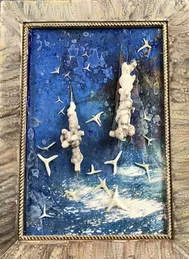
RISING FROM THE SEA
Mixed media construction: Altered paper, sea squirts (white crust tunicates), porcupine fish spines.
2016.
Like stars rising up out of the ocean… the elements of this piece are amazing, worthy of deep contemplation. When I was handling them I was indeed holding infinity in the palm of my hand (thanks to William Blake, “Auguries of Innocence,” for that phrase.)
The white cylindrical forms are (the dried-up bodies of) white crust tunicates (Didemnum vexillum). I found them on the beach on a calm spring day--nothing remotely similar ever seen before or after. The encrusted sticks immediately reminded me of the rock candy you make by crystallizing sugar over a suspended string. But this is not a crystallization process: tunicates are “sea squirts” --so called because when lifted out of the water, they contract and squirt water out, although it is hard to imagine these hardened bodies contracting at all. The animals formed a colony around some form of sea grass or other vertical element. Tunicates are filter-feeding animals with a sac-like body form. They live within this outer “crust,” which actually functions as a kind of living tunic. They reproduce quickly and in their larval stage, a square centimeter may hold up to 300 tunicates. Thousands and thousands must be in use of these forms—think of the amassing colonies, holding, enclosing, enveloping. It’s not rock candy, but it is a kind of eye candy, the always astonishing world of form, which is so complex and so simple, so much an example of her infinite variety.
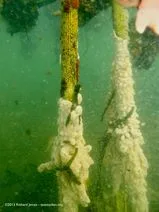
A sea squirt (tunicate) colony that reminds me of rock candy. It’s an invasive colony growing on a suspended oyster growing device called a French tube, in Drakes Bay, Point Reyes, California. Photo from The Coastodian, March 2014.
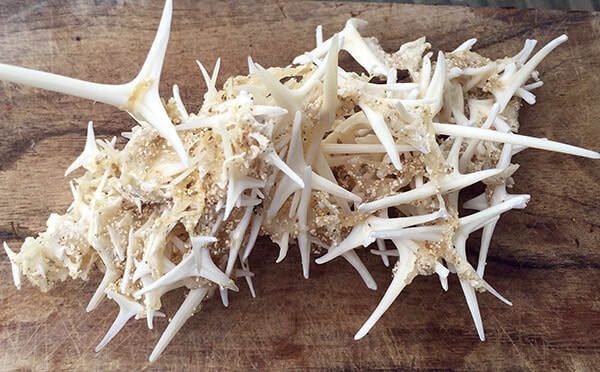
I didn’t have to do anything to the tunicates, but there was a long process involved in extracting the other material, the tripod-like pointed forms, which are spines from the skin of porcupine fish. (These are sometimes erroneously called pufferfish, but they aren’t exactly the same.) I first discovered a washed-up specimen of a bulbous, prickly-looking creature on the Pacific coast of Mexico. It looked both faintly comical and frightening; the inflated body felt like an over-inflated balloon, but the spikes were formidable. I discovered these two features were the very characteristics of the way this animal defends itself; when threatened, it inflates itself to three times its normal size by sucking or pumping in extra water. Its stomach, which is pleated, expands to nearly a hundred times its original volume. Biologist Beth Brainerd observed the amazing structure of these pleats -– there are folds within folds within folds, down to pleats so tiny that they can be seen only through a microscope. (It’s like a fractal--isn’t this the way form keeps going, in our bodies too…)
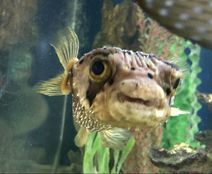
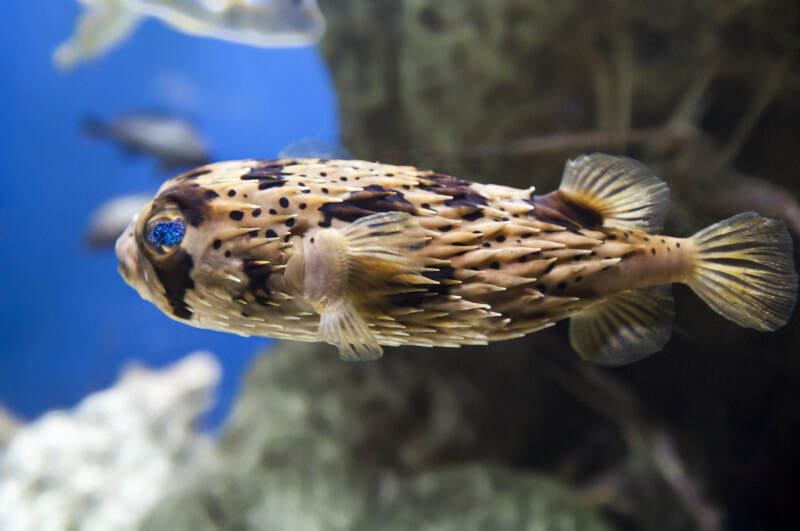
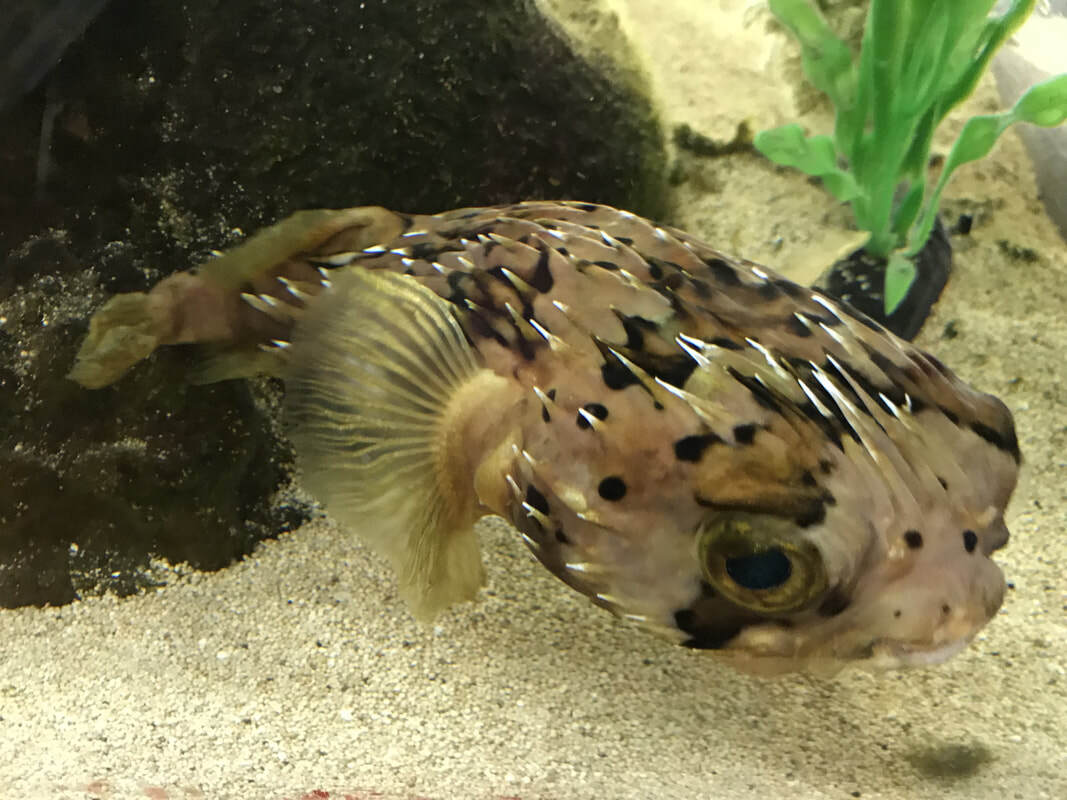
Views of living porcupine fish. The bodies are not inflated and the spines are visible, but lying flat (much like a porcupine’s quills).
When the porcupine fish inflates, its usually-flattened spines rise to vertical positions, forming an all-over armor reminiscent of porcupine quills. This happens because the skin is so stretched that it pulls two of the tripod-legs of the spikes backward and the other forward, snapping the structure upright. An inflated porcupine fish can’t move very fast—it is the opposite of streamlined—but it doesn't need to go fast with this kind of protection.
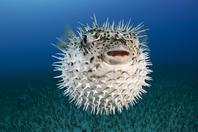
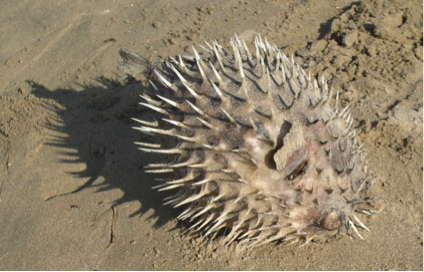
Inflated porcupine fish with extended spines.
I was immediately interested in the spines—beautiful white external bones, almost begging to pulled out. I started with brute force—tugging, trying to extricate them from the skin, but they wouldn’t budge. I didn’t yet realize the ingenious structure of the spines, or the two layers of skin they stitch together. I soaked the skin, making it somewhat more pliable, and with great effort and snipping, slowly retrieved them, one by one. I admired their tenacity. Removed, they were like trophies, and I loved just looking at them, at their smooth, plastic-like surfaces and their satisfying shapes. It was especially lovely to take in the different sizes and how they each grew to fit their position on the animal.
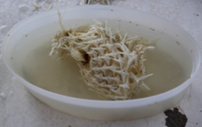
Soaking the original Mexican fish
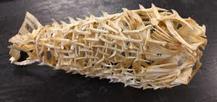
Skeleton of porcupine fish.
Spines still attached to organic matter.
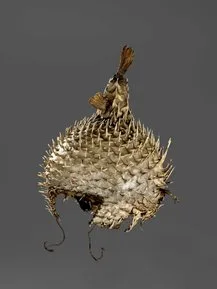
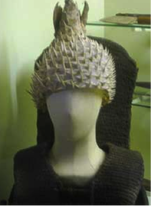
The threatening quality of porcupine fish spines were put to use in the South Seas. These defensive helmets were used by warriors from Fiji and neighboring islands. These must have been much bigger fish than the ones I have worked with.
Many years went by before I encountered this type of fish again, this time on the eastern shore of the Gulf of Mexico. The ones washed up there had different coloration, and they were smaller (no more than 10” long) and their spines less lethal-looking. I haven’t a definitive identification, but they may be what is sometimes called a striped burrfish. Its spines are always visible, and while the animal also inflates when threatened, it would only grow to about twice its original size. Burrfish live in seagrass beds in bays and coastal lagoons associated with reefs. They are nocturnal. They have widely-spaced, bulging eyes and fused teeth that form a beak-like structure.
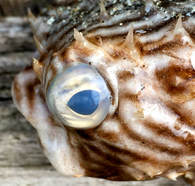
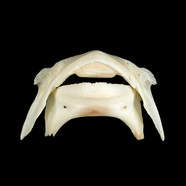
I saw a number of partially dried-out porcupine fish in the aftermath of a red tide (an off-shore algae bloom that reduces oxygen in the sea), and was excited about extracting more spines, but I hesitated because the decaying bodies were quite rank. I also remembered how difficult it was to get the spines out when I was in Mexico. I took some home and kept them in covered container until I could decide what to do (fire up the new grill and risk getting a pot messy with the flame or stinky with the fish smell?). While I was deliberating, I found a remnant of another dead porcupine with just a bit of the skin left on the spines. As the skin dried even further, I was able to extract the spines with some poking.
This still wasn’t going to help me get them out of an intact fish. I put one in peroxide to soak and of course it bloated out, got soft. As it rehydrated, I was able to really see its patterning—to take in its stripes and the false “eyes” on its back.
This still wasn’t going to help me get them out of an intact fish. I put one in peroxide to soak and of course it bloated out, got soft. As it rehydrated, I was able to really see its patterning—to take in its stripes and the false “eyes” on its back.
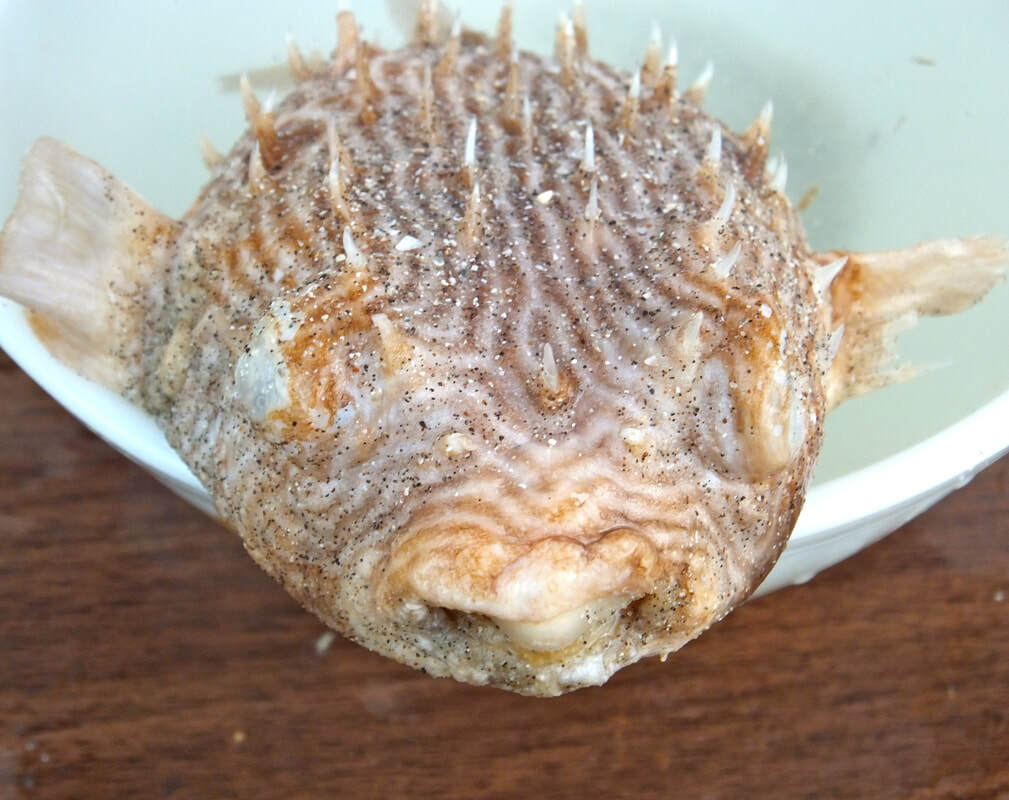
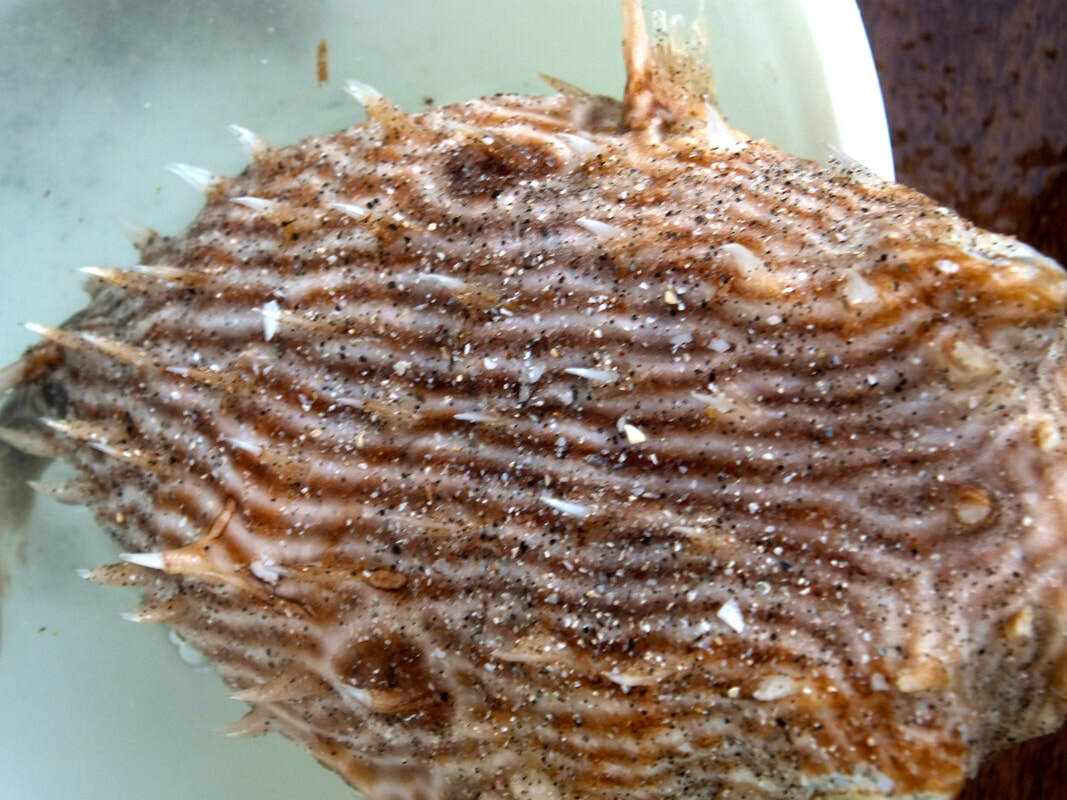
I put on my gloves and got ready to gut the fish. It had few spines on the belly, so it was possible to hold the little fins and start there. I used a grapefruit knife with a serrated edge to saw away at the flesh. Once the innards were removed and the spiny skin was rinsed, I hung it up to dry on the clothesline. The smell was mostly gone after the peroxide rinse.
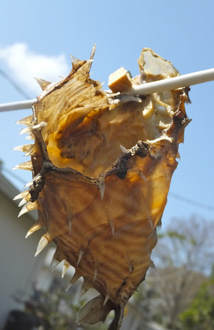
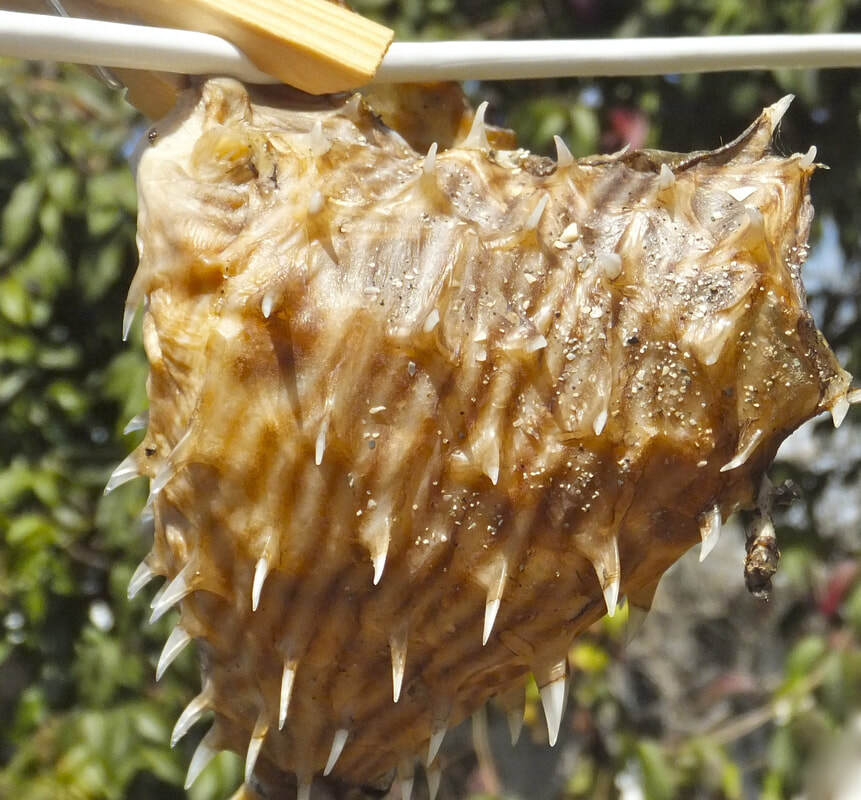
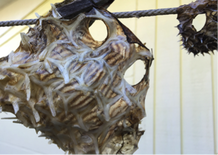
I varied the process to see what worked best. I never soaked the second fish, but wetted it down enough to rinse it off. It was easier to work when less saturated; I could actually get the inside out more easily. I peeled back the skin and let it dry further. The pattern of the spines in the flattened-out skin is stunning. They overlap in what looks like a mathematical progression, not unlike the “boots” of the sago palm that are so common in southern Florida.
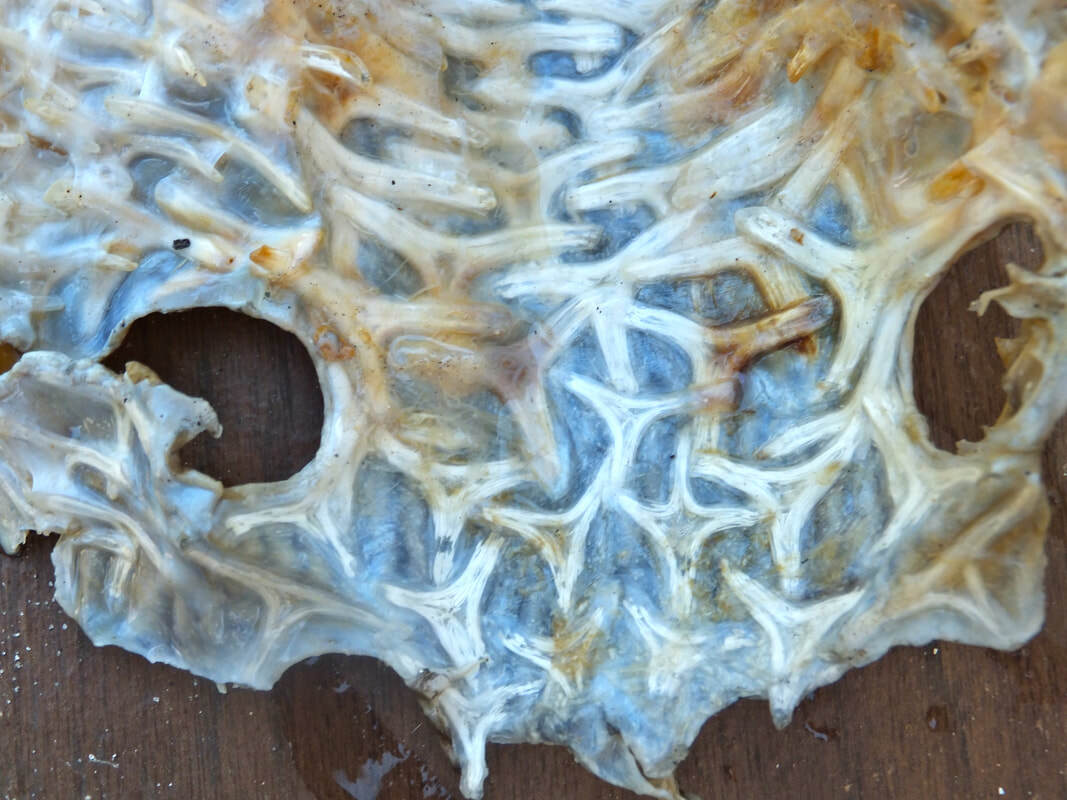
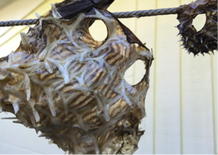
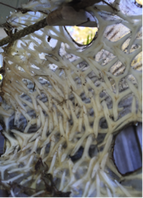
The last steps of the spine extraction were done in the kitchen. I first tried to soften the skin in the microwave, but that only made the bones brittle. Remembering how I extracted hooves and bones from deer legs, I then boiled the spiny skins. This worked beautifully, especially because I could slit the skins to make even smaller pieces. The skin eventually broke down in the boiling water, and I could pull out the spines, much as one would extract a bone from a fish on a dinner plate. The spines were a little yellow from the fat in the skin, but a short soak in peroxide brightened them nicely. I love their form, which seems to hold a key to something mystical—it reminds me of some aspect of sacred geometry I can’t quite name.
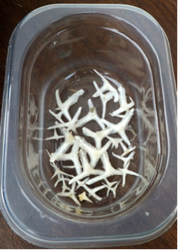
Meanwhile, I learned more about the porcupine/pufferfish family, feeling more amazed all the time. I read that once the body of the puffer fish is fully bloated, its predators can neither take a grip nor bite through the skin. In fact, it has been found that its tough body remains unscathed even after a grown man stands on it. No wonder I couldn’t win the tug of war with my first Mexican find! (I can’t identify the particular type of that porcupine fish—there are more than 120 species of Tetraodontidae in all, and I only have my documentation photograph.) In addition to their inflation and spines, many of these animals also carry a powerful toxin. It is found in various parts, including the skin, ovaries, muscles and liver. This paralyzing poison, known as Tetrodotoxin, is about a thousand times more deadly than cyanide; one source says a single puffer fish (species or size not specified) has enough to kill 30 adult humans! There is no antidote. Nevertheless, the fish are still popular for aquarium displays, and some puffers are considered a delicacy food fish in Asia. The dish (known as fugu in Japan, and bogeo in Korea) is prepared by specially trained chefs who know how to reduce its poisonous effects. I cannot confirm this, but have heard that about a hundred diners die every year after consuming it. Even if the figure is apocryphal, we can see what a powerful hold this fish has on human consciousness.
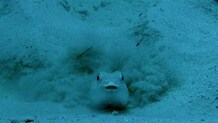
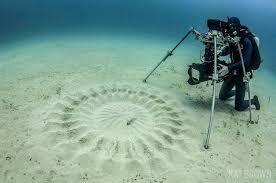
The most astounding part of the story just came through recently in an excerpt from a BBC-Earth documentary that was posted on YouTube. In 1995, divers noticed a small mandala-like circular pattern on the sea floor off Japan. It was mathematically perfect, and nobody knew what it was. Once they started looking, they discovered similar circles nearby. The mystery was heightened by the fact that they came and went unpredictably, and they reminded observers of crop circles, though they were completely underwater.
The most astounding part of the story just came through recently in an excerpt from a BBC-Earth documentary that was posted on YouTube. In 1995, divers noticed a small mandala-like circular pattern on the sea floor off Japan. It was mathematically perfect, and nobody knew what it was. Once they started looking, they discovered similar circles nearby. The mystery was heightened by the fact that they came and went unpredictably, and they reminded observers of crop circles, though they were completely underwater.
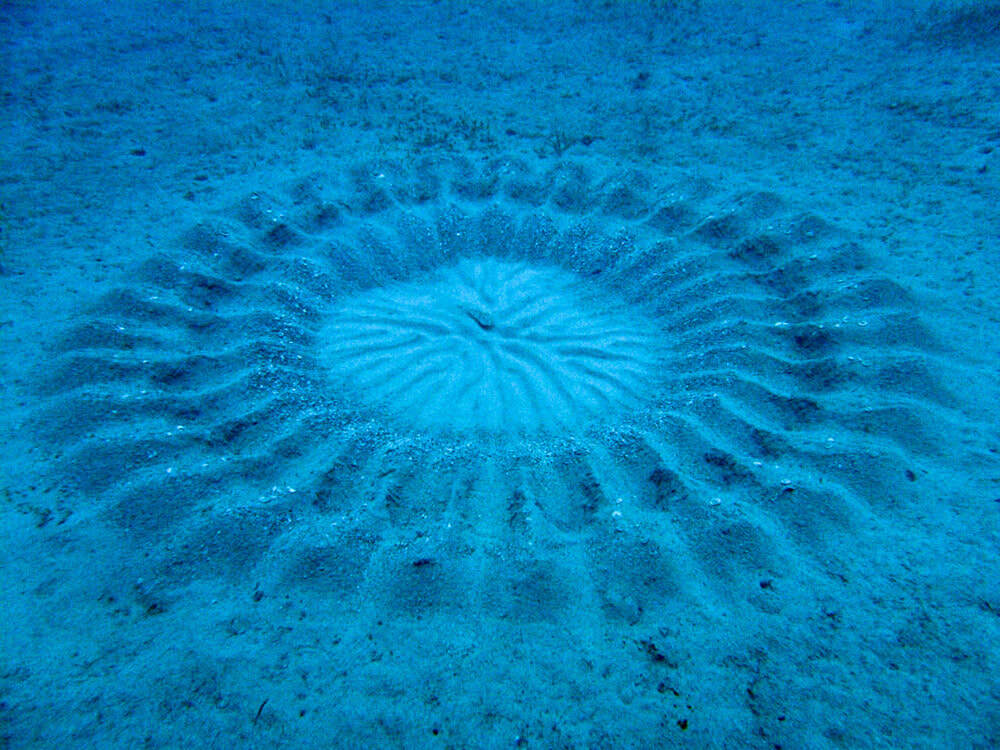
Finally, observers realized that the formations were created by a newly discovered species of pufferfish—by male fish, who use them to attract mates. They laboriously flap their fins as they swim along the seafloor, essentially carving out the pattern in a circular formation by disrupting the sediment. They even use shell bits to stabilize some of the higher areas. The documentary claims a fish works non-stop for a week to make a single circle! One fish is only about 5 inches long, so it is quite a feat to make something of this scale. The video of the fish doing this is, in the truest sense of the word, awesome.
The scale of the circle is understandable in relation to the underwater camera operator
I have actually been slow to find ways to incorporate the porcupine fish spines in my work; their shapes are challenging to work with effectively. I do not want them to appear as they would on the fish, as I want the beauty of the whole tripod-like shape to be visible, rather than just the tip. (It’s as if I must peel away the skin for my audience, much as I had to do in processing the material.) Many of the spines I have are very small and delicate, and almost fly out of my hands when I try to handle them. In Rising From the Sea, that delicacy works well with the impressionistic forms of the background and the solidity of the tunicate.
- Published on
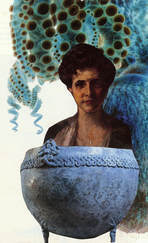
THE BACKGROUND
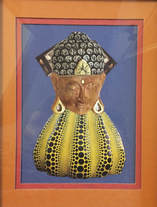
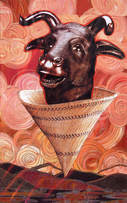
Over the last five years or so, I have made a number of collages that feature a figure coming out of a container—emerging, as it were, into a bigger world. I found each of these images compelling and very powerful, but it was only over time that I came to see the repeating pattern or consistent theme. These are a few of them.
THE 2017 EMERGENCE SERIES
As I was playing with images for new collages this past fall, allowing them to grab my attention and show me how they wanted to come together, I realized there was an evolving series that followed this same pattern and emergence theme. I decided to develop them as a set, with a consistent size and background treatment, so they could work and speak together. (Each is on an 8” x 8” ground.) The ten panels can be arranged in any configuration and any order. Collectively, they speak of a changing consciousness, something happening on an energetic level that I am giving voice and face to. Here’s what came forward when I asked them to speak:
SPEAKING IN A COLLECTIVE VOICE
We are all emerging now. We have been held in, often in exquisite containers, but we have still been waiting, we have been stored inside. Our faces and forms are from everywhere—from many peoples, many dreams, many imaginations and creativities. We are rising now to what has not been contained, what has been just beyond reach. See the light in each of us—we each embody it, rest in or against it, have it shining on us, pick it up and transmit it. We are classic, holy, revered, contemplated, we have halos and auras and transmitters. We are all stillness rising. Look: this, our community, that is coming out now.
SPEAKING AS INDIVIDUAL PLAYERS
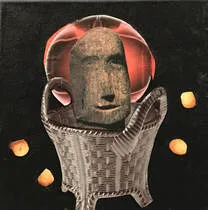
Look at my cold, small-eyed face. I was longing for something enlivening. I now rise from a workbasket, holder perhaps of laundry, or apples, companion for everyday tasks. I arise to a new bubble, a bright aura, and I will be transformed. Soon my eyes will grow large as I come to see more and more. I am looking about, and it is stunning.
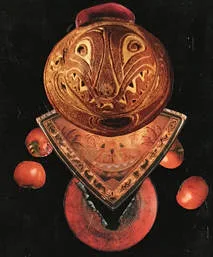
I have held pain and fear, buried in an elaborated vessel of ancient patriarchal culture. Mine was a grimace of pain. But I am coming up now, no longer stuffed down in there. I am emerging into my true filigree halo, and tears of anguish are falling off one by one
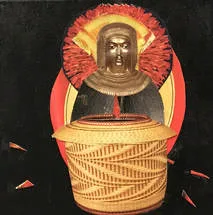
I am still contained, not pushed down or hidden in my container, but contained in my knowing. As I rise from this beautiful basket, my full aura comes through: my vitality, my quivering reds and golds, my shining nut body. Behold this holy mother with huge vibratory pulsing.
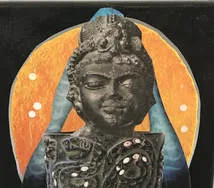
I am rising from stone, from snakes. I have been holding female power all along, and now I am coming out fully. I smile. I look with great love on all of this. I am jeweled, and I am listening. Note that I hold channels down to the earth, beautiful blue channels of wisdom and love that carry messages both ways. I bless you all with my peace, calmness and certainty.
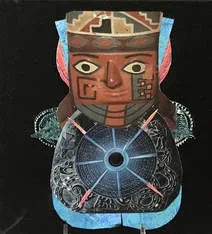
I am a cosmic being, with snakes and birds and pulsing pulsars, with stepping stones, with alert pieces working together. Look how I beam forward from my heart. I receive, I broadcast. Connect with me, coming from this and other planets, coming out and beaming.
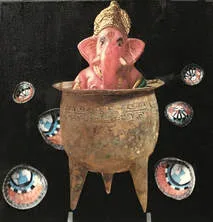
Prince Ganesha comes out of the cauldron—you can’t hold me! You see my energy rising. These wisdom pearls show you we are all coming up. Such beautiful materials, the coral and turquoise, the gold and brass, the pinkness of my body—we are light-filled and dreamy. Indeed, no obstacles. Do we surprise you? I am eternally ready, available. Hi there!
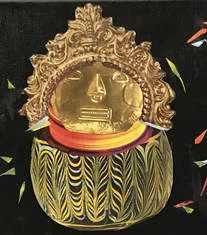
I have been masked. I had a golden mask, a valuable, golden diadem or crown, and a lovely, handmade container. Nevertheless, I have masked the truth. Now I am rising into something beyond. I am unmasking. Note the glowing necklace around my throat—the energy bursts all around. My disparate parts will now stand apart from one another, calling to the sun.
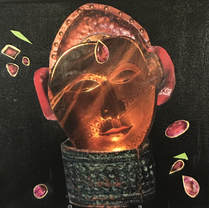
I too come out of a metallic prison, but I am turning the metal into a crown, into jewels that come to life. Look at my light! And I hold so much pattern—patterns of people from everywhere. I have receptive ears and eyes ready to fully open. I am a being of light and I cause my face to shine upon you.
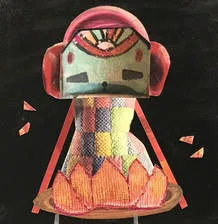
I arise from a lotus, and hold to the ground as well as the cosmos. I turn everything upside down. I hold order and rising sun. I have large ears to get the messages of the cosmos. I see you from deep within and I hold fast, grounding you with the biggest messages and truth.
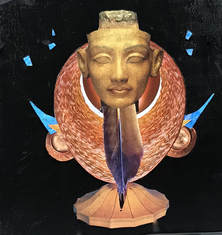
Watch me, hear me, use me. Deeply aware, my container is light filled, alive, shiny, moving. It comes from a pedestal. All is in balance. I hold old knowledge. My feather beard and big ears show that I am all about hearing, receiving messages, and bringing them out.
- Published on
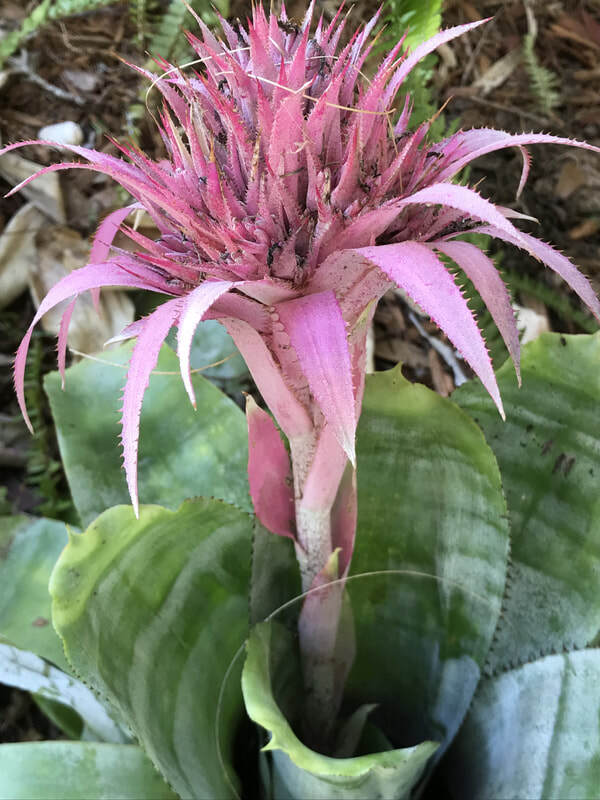
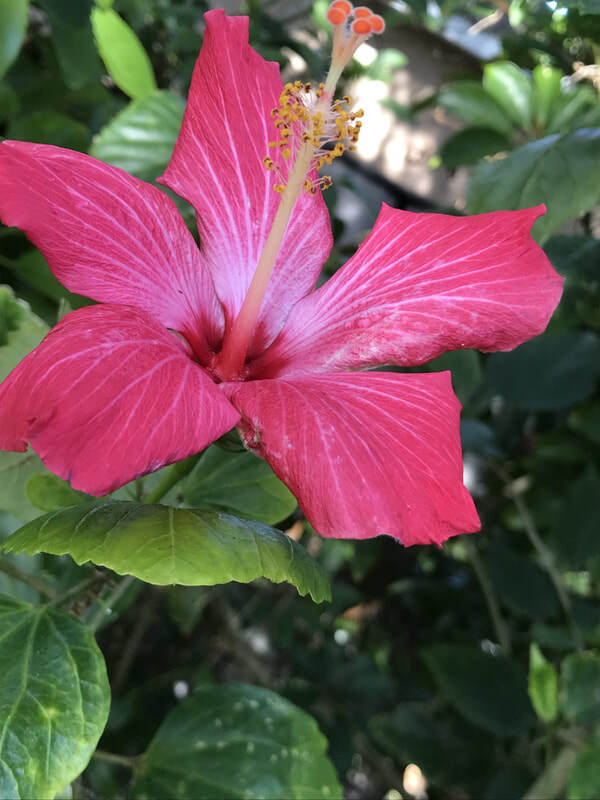
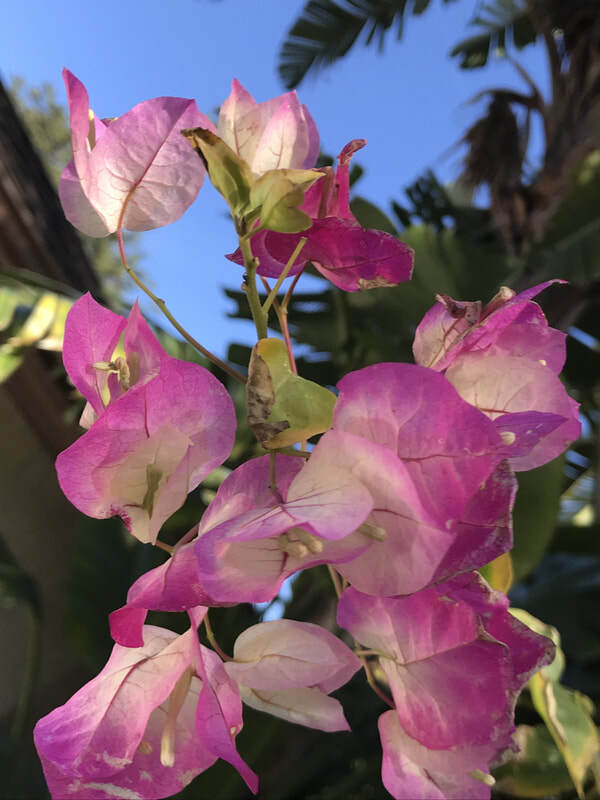
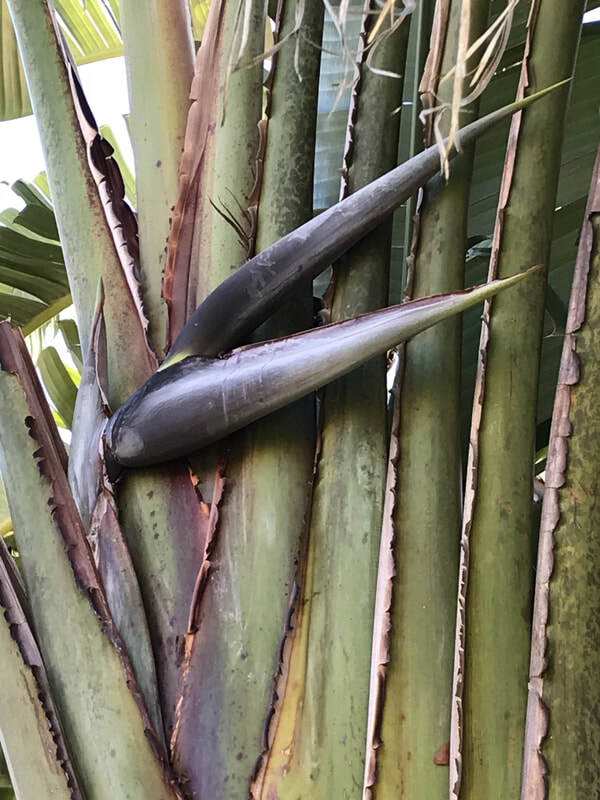
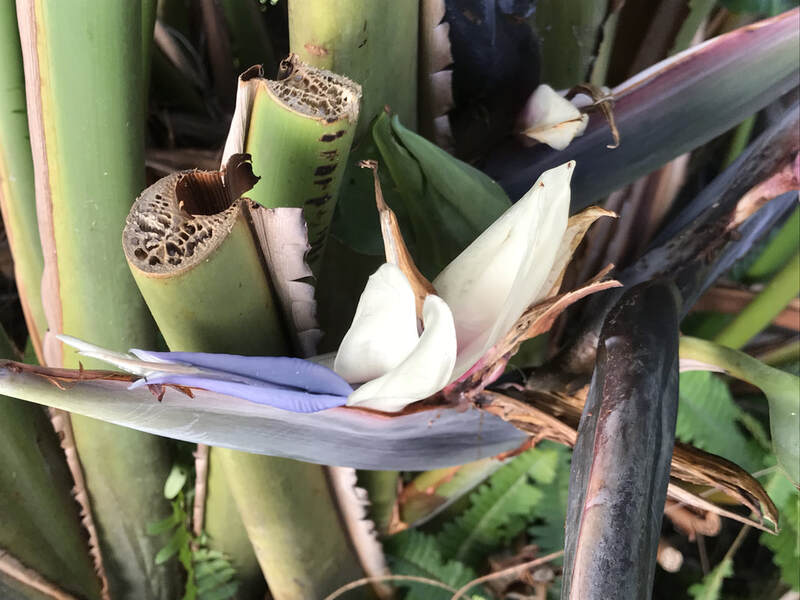
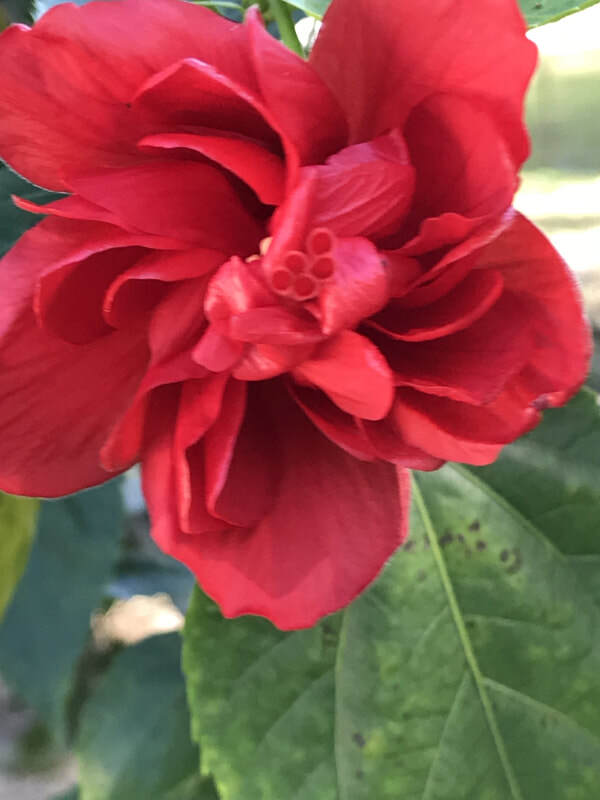
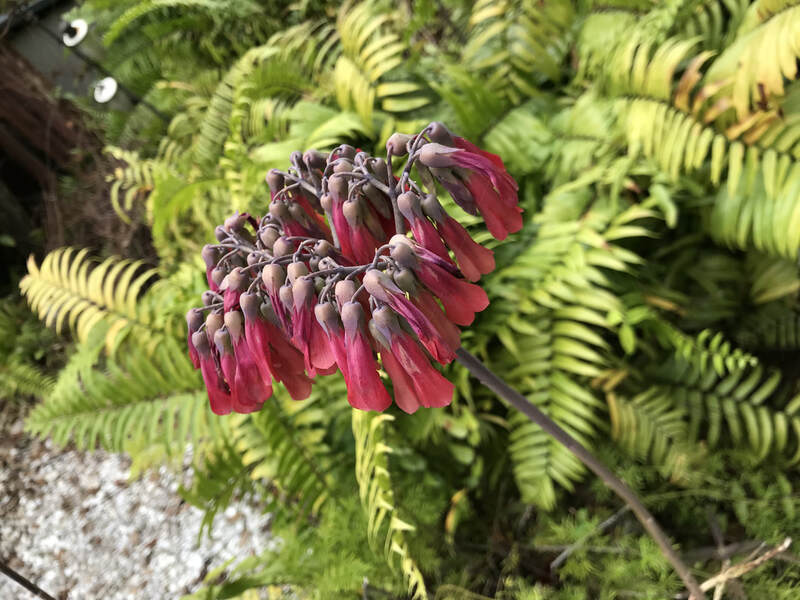
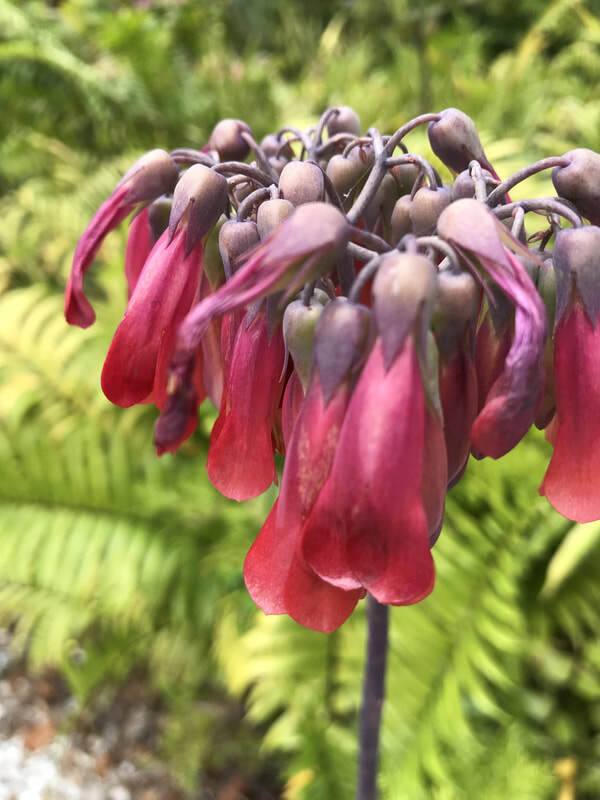
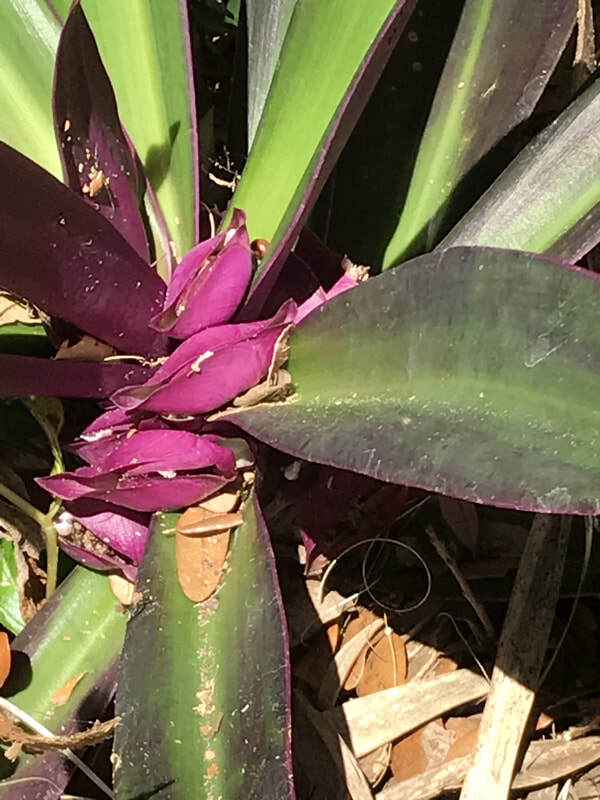
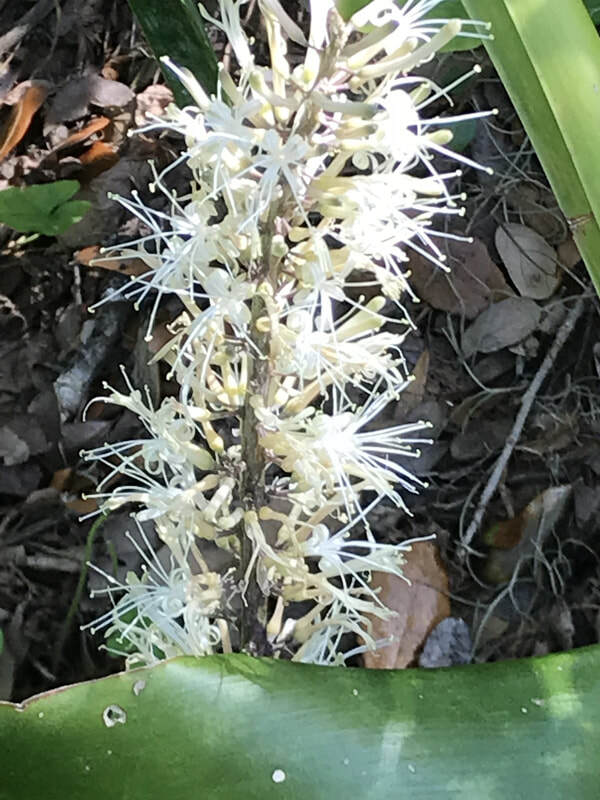
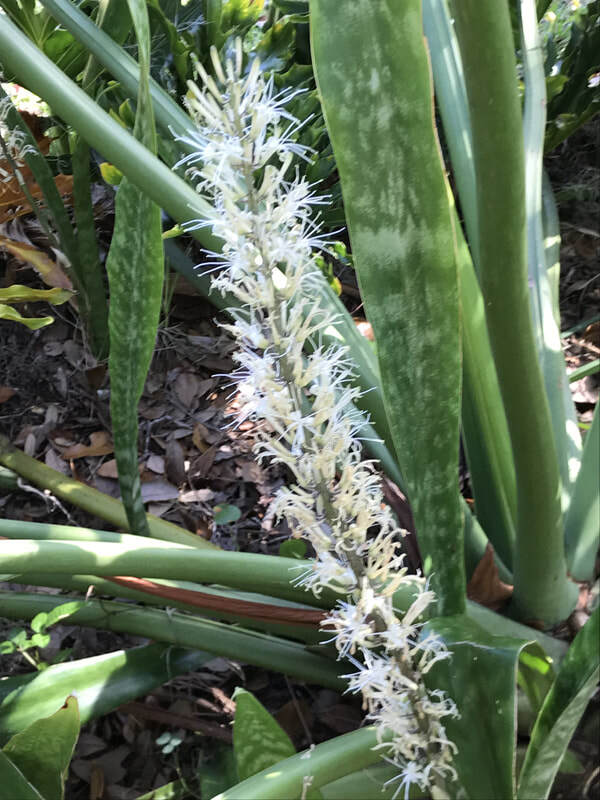
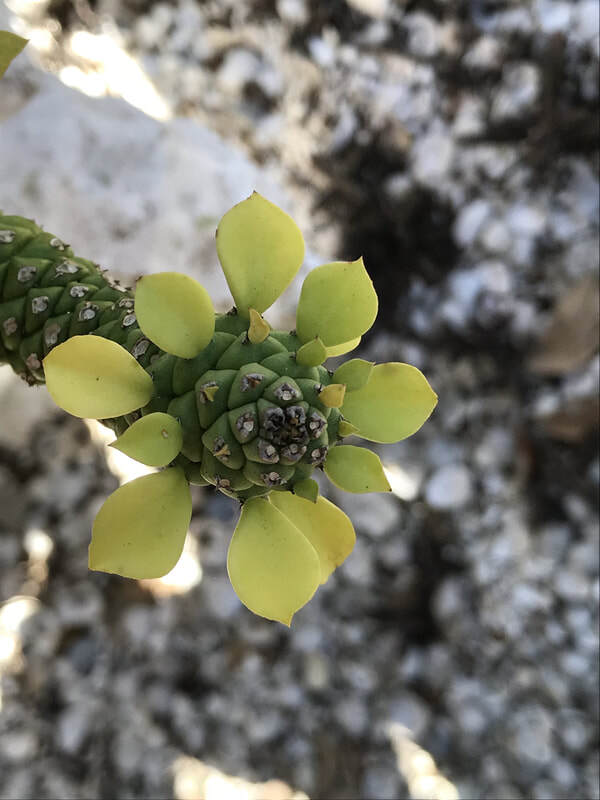
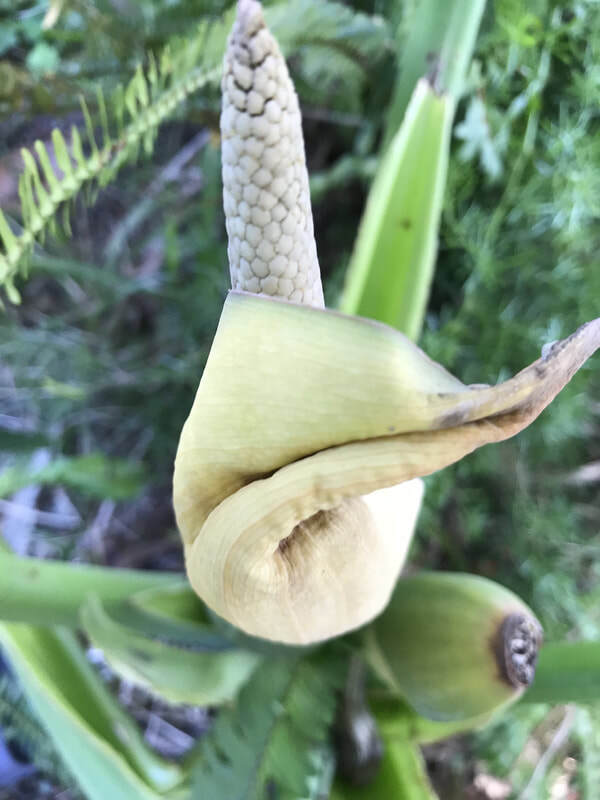
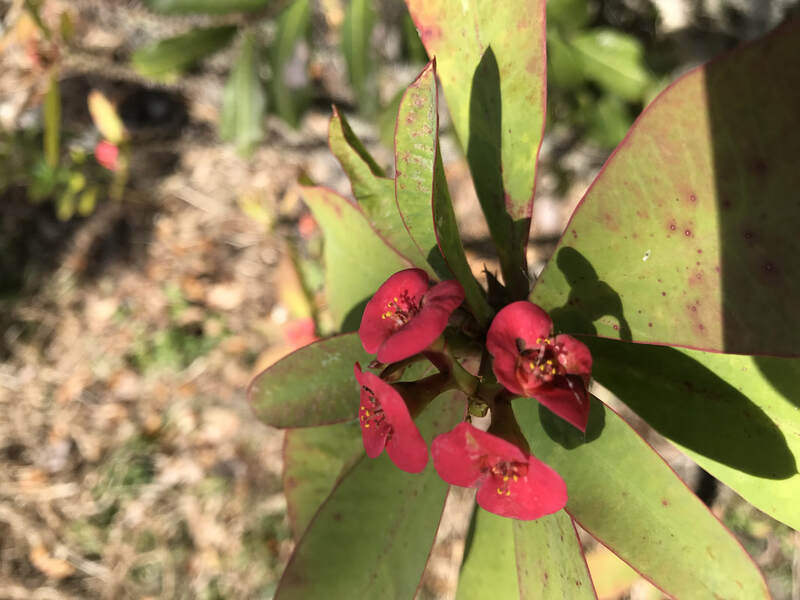
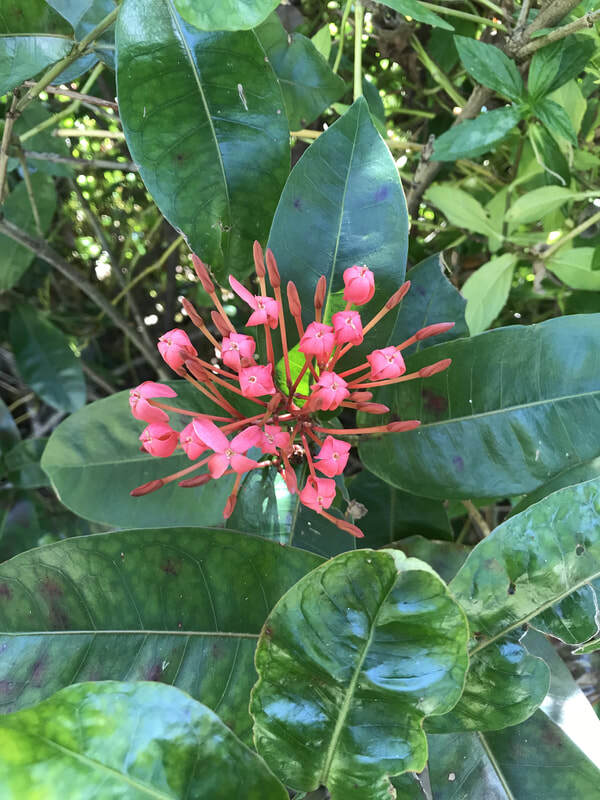
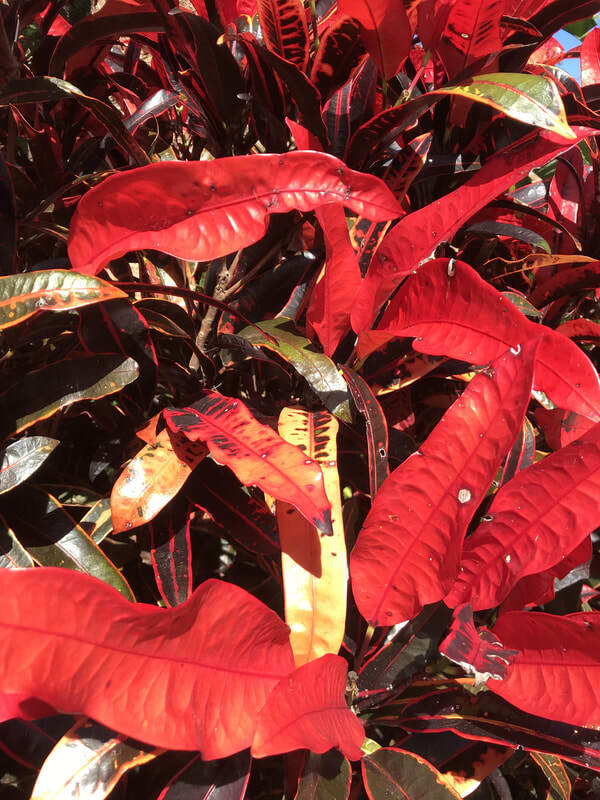
First, a photographic meditation/appreciation of the environment here in my Florida yard. This time I’ll focus on flowers, but there is so much more greenery for another time. Most of these images were taken on a single day in late January—these were what was in bloom somewhere on my “estate.” I've also planted a number of other plants that have yet to flower, but these were all here for me already. It’s quite awesome to really take in how much life and energy is happening at any one moment. Check out the captions --sometimes there are comments.
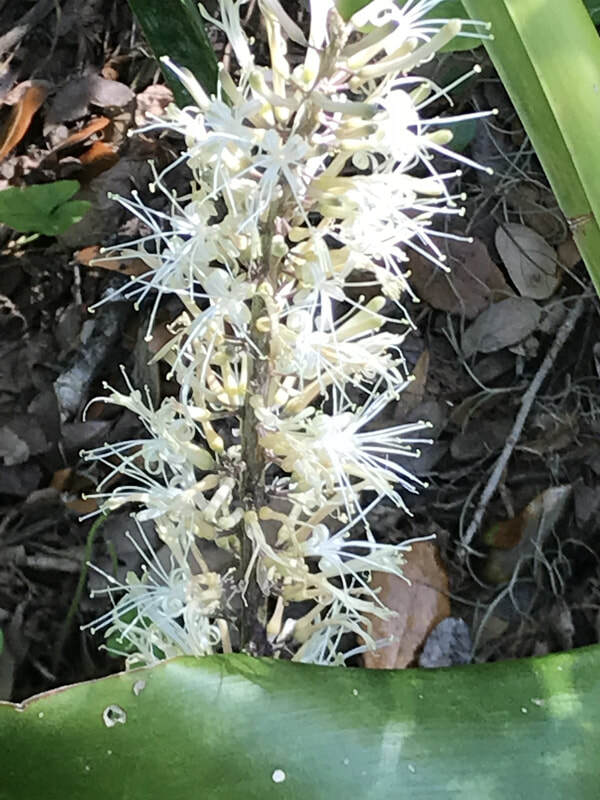
The first, larger image was one of the revelations of the month. I have lived with snake plants for decades, but had never seen these exuberant blooms. When many were blooming at once (and briefly, just for a few days) it felt quite astounding. the plant is also called mother-in-law's tongue, which probably refers to the blade-like leaf, but if the tongues are the flowers, the message is sweet. Since I am a mother-in-law, I vote for the blooms.
The first, larger image was one of the revelations of the month. I have lived with snake plants for decades, but had never seen these exuberant blooms. When many were blooming at once (and briefly, just for a few days) it felt quite astounding. the plant is also called mother-in-law's tongue, which probably refers to the blade-like leaf, but if the tongues are the flowers, the message is sweet. Since I am a mother-in-law, I vote for the blooms.
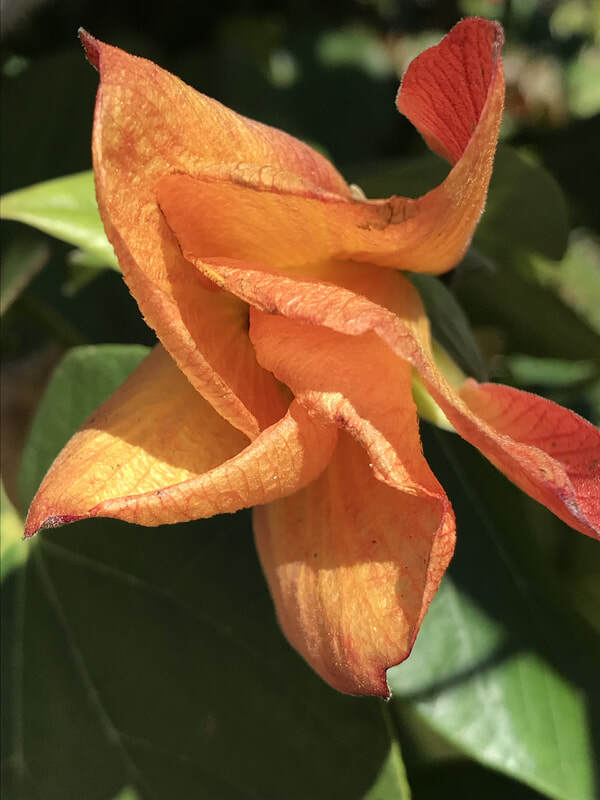
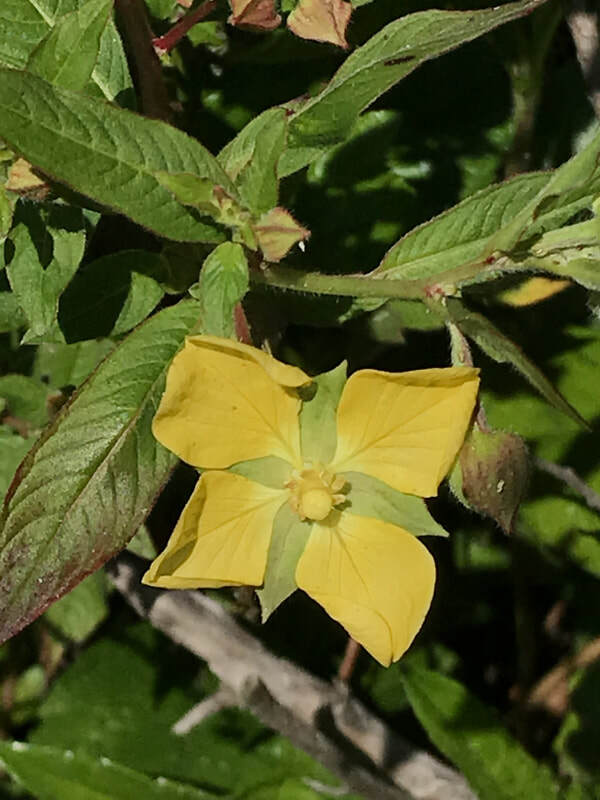
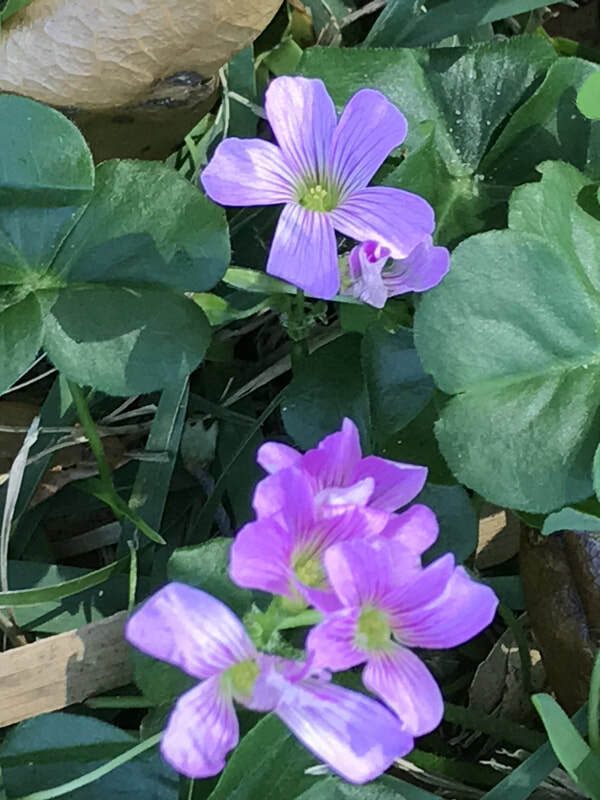
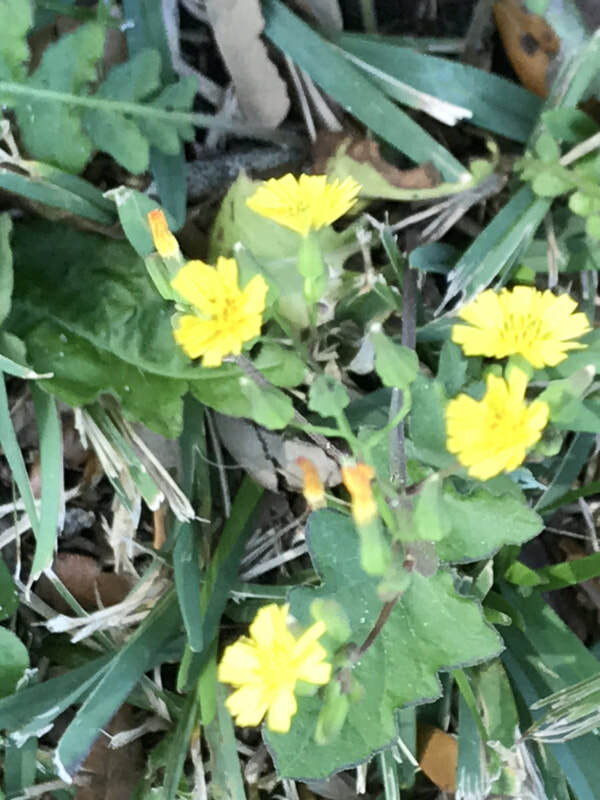
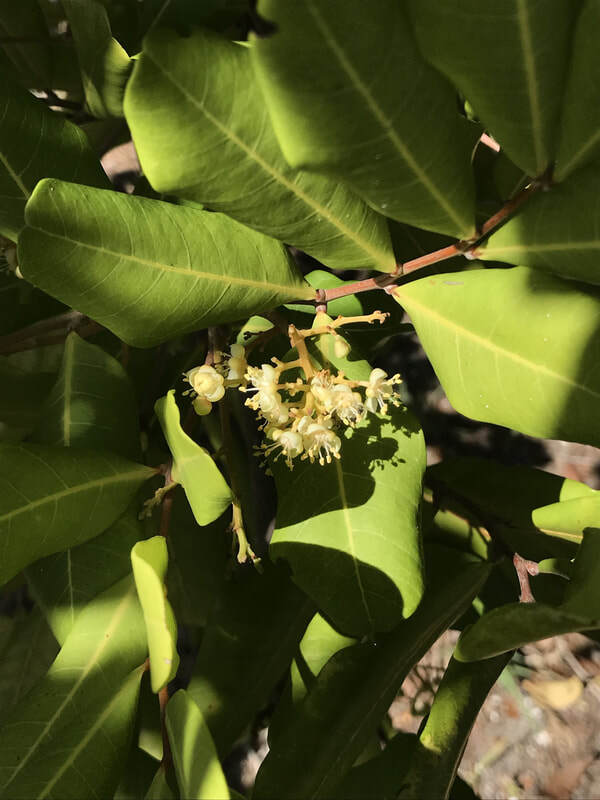
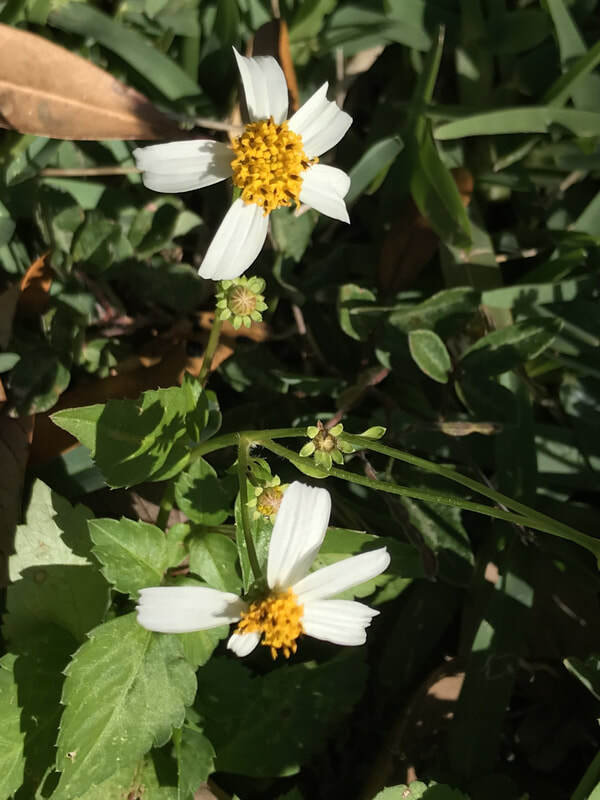
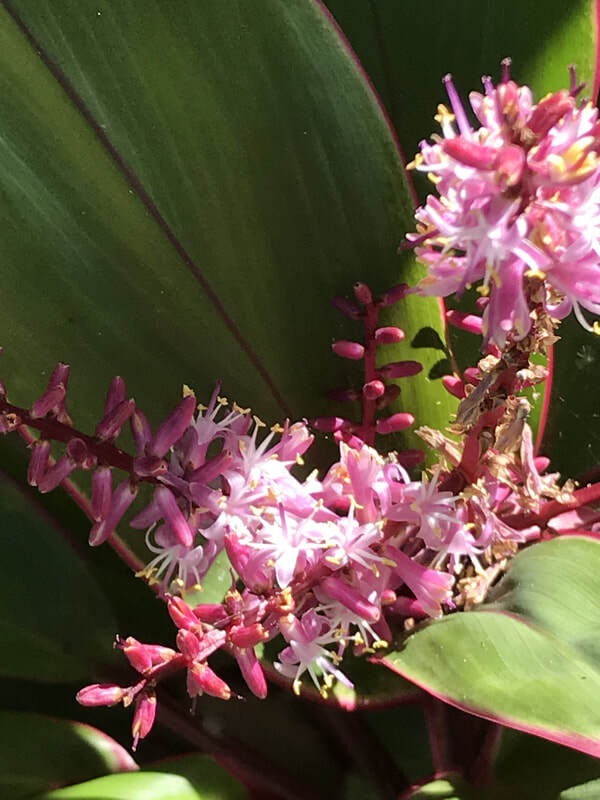
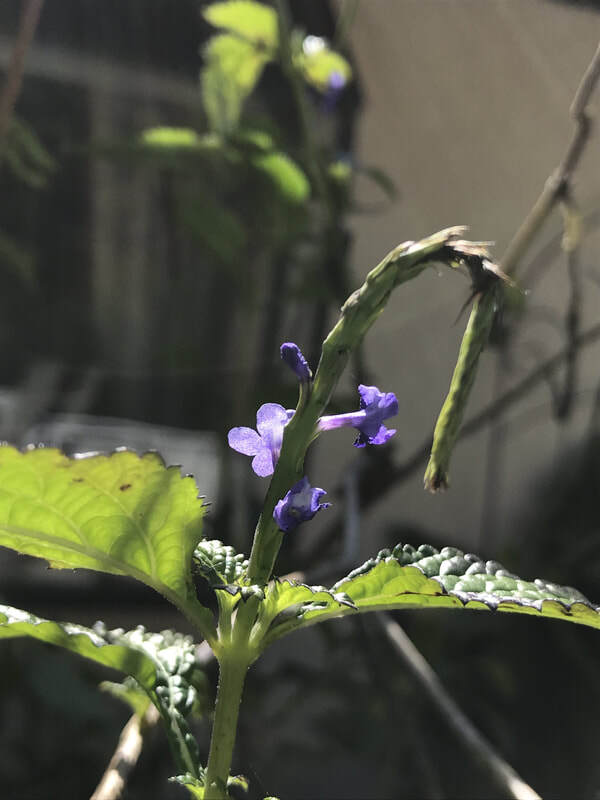
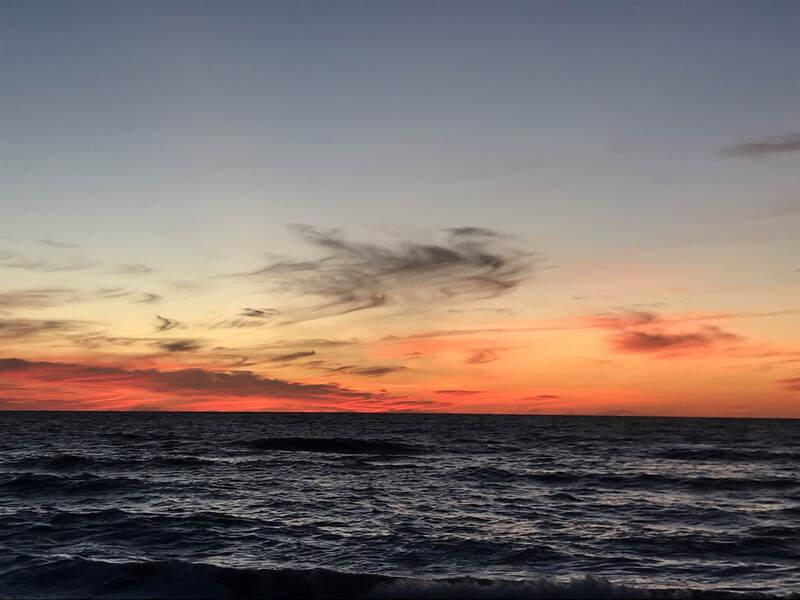
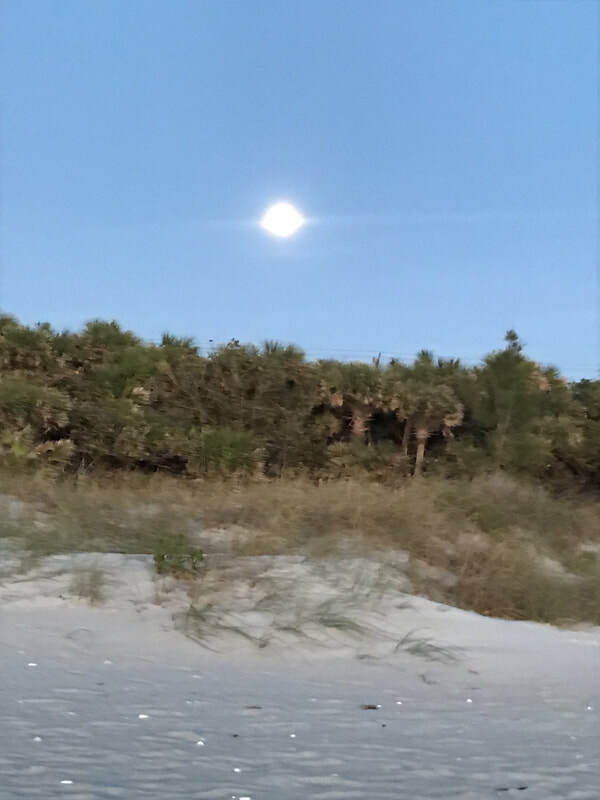
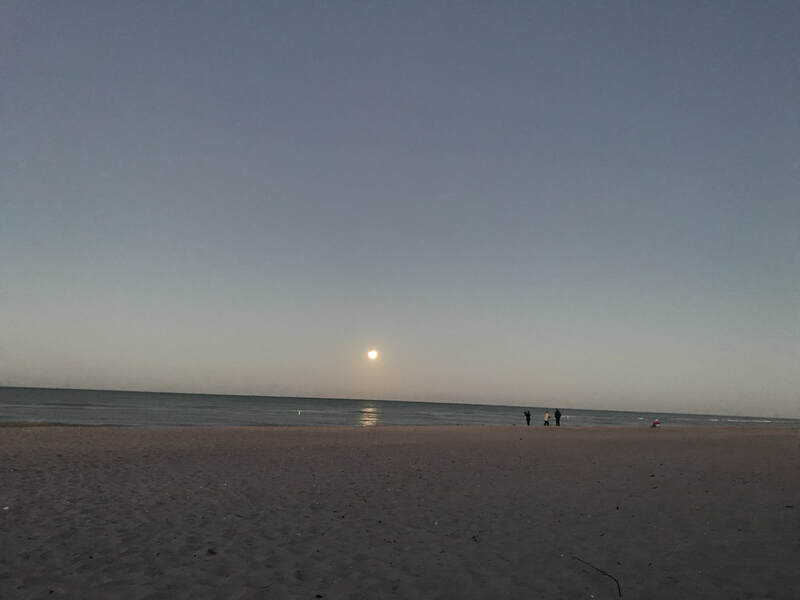
My birthday at the end of January was blessed with a powerful event in the skies. It was a supermoon, blue moon, and then early the next morning (or the same night in my experience), a lunar eclipse. I took a sunset walk along the (Gulf of Mexico) beach, as I often do, and the heavens were blessing (that is a line from a Shaker hymn I have long held dear). The sunset was stunning, and I turned around to see the supermoon rising. The pictures don't do justice to the moon, given the light and the lenses, but it gives a feeling.
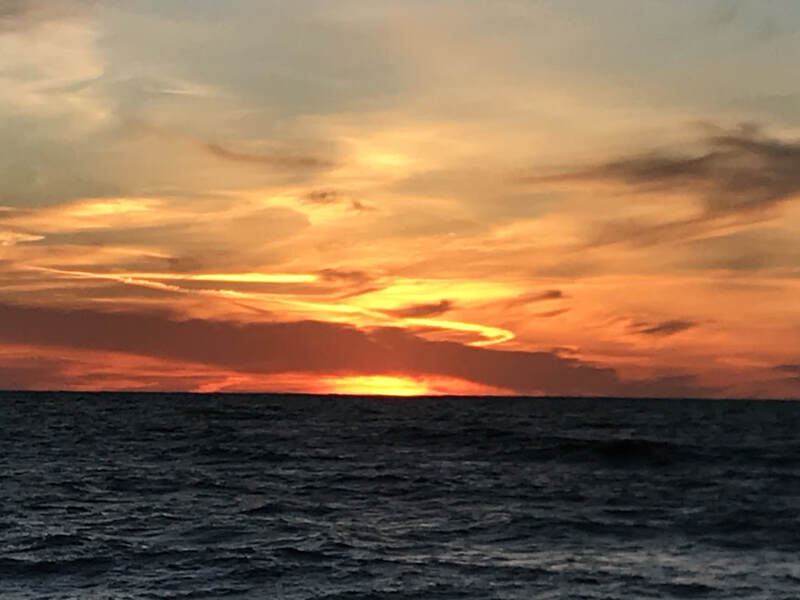
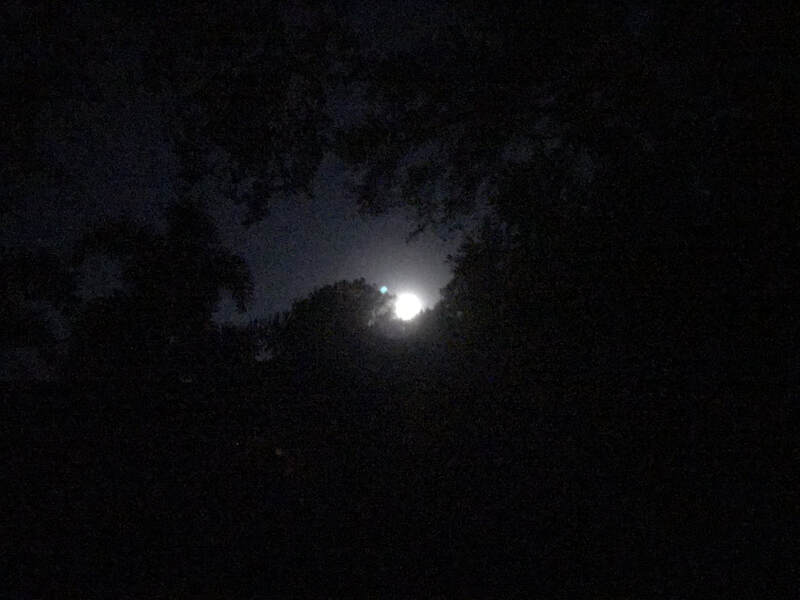
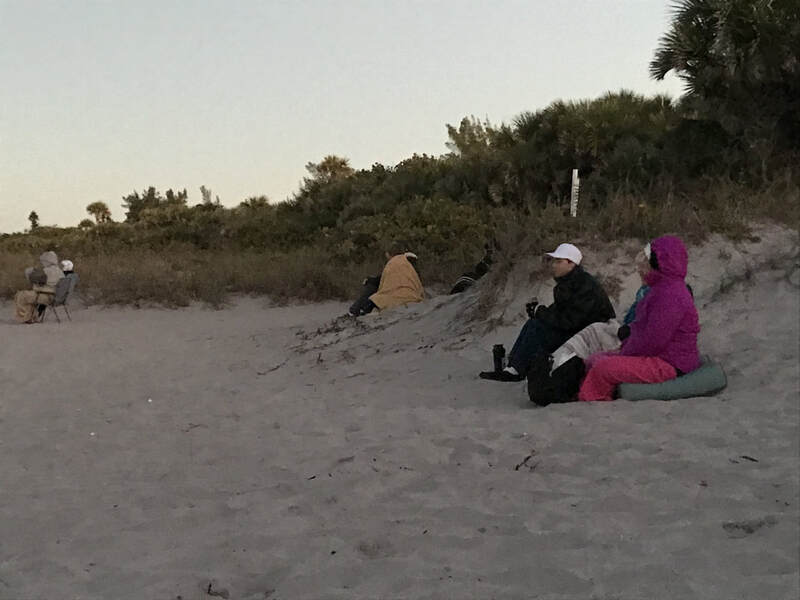
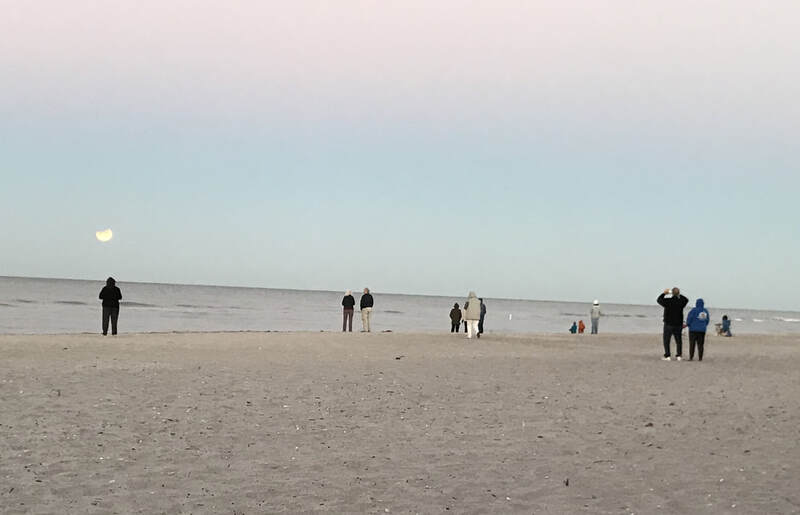
I returned to the beach for the eclipse. What was exciting was that the parking lot was surprisingly full--many others had the same instinct (we were all drawn, almost magnetically, to the unobstructed view over the Gulf). When I arrived it was still dark enough for the full moon to reflect in the water, although the sun was rising and that soon faded. The eclipse began and the excitement was palpable; all those bundled-up people (it was less than 50 degrees) facing westward, migrating closer and closer to the water as if they could be closer to the moon. Unfortunately, in this time zone the moon set before the moon was even fully covered or the eclipse was complete, so we never got to see the whole thing or the blood red effect. But this was quite a birthday gift!
- Published on
I'm sharing in some detail about two of my collages--their genesis, their materials, and how they reinforce my ongoing spiritual (and natural world) journey. The post weaves touches upon my nature adventures, my art-as-inner-guide insights, and my artistic process. Comments welcome!
Several years ago, I made a powerful SoulCollage® card. It was the night of the vernal equinox and one of the first water blessings associated with the protests over the oil pipeline at Standing Rock had just taken place. I was feeling happy, and experiencing a strong flow of energy. The card told me its name is Mor, which seemed almost too much of a pun with “more,” but that was clearly it. Mor had a lot to say:
Several years ago, I made a powerful SoulCollage® card. It was the night of the vernal equinox and one of the first water blessings associated with the protests over the oil pipeline at Standing Rock had just taken place. I was feeling happy, and experiencing a strong flow of energy. The card told me its name is Mor, which seemed almost too much of a pun with “more,” but that was clearly it. Mor had a lot to say:
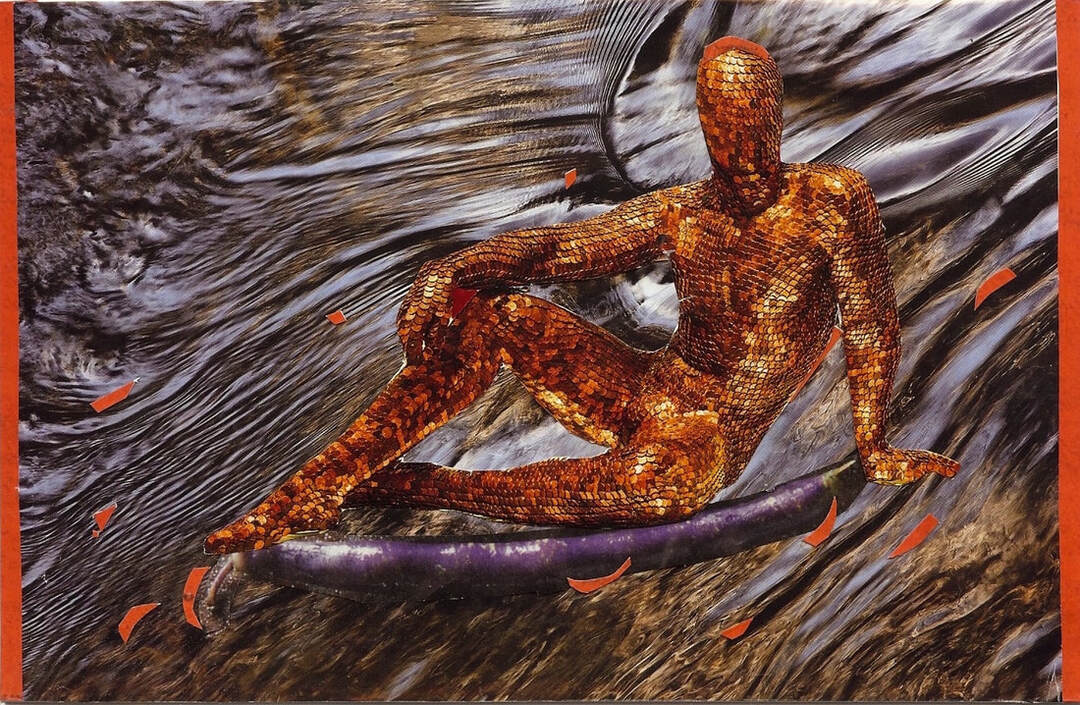
I am the beautiful metallic man, covered with shiny coins and trailing orange wisps of energy as I ease down the river. I ride my bean raft, my living vessel, and I touch the water as its life-giving energy moves through my hand. It is clear, fresh, clean, and carries away debris in a constant state of renewal. I am abundance and radiance, the man of the future perhaps, the reflector (as a woman is a reflector) but also the shining sun. I am bringing forth this orange energy, which beams vitality and energy, a second chakra creative force. I am an empowered male with very strong legs, and yet my posture is reminiscent of a mermaid, and I am open and receptive. I am a guardian for you, one who brings ease, comfort in the body, and the ability to watch it go by. The orange bits are little energy pixies, enlivening, the forces around you—I show them to you and they trail in my wake, like dragonflies.
----------------------------------------------------------------------------------------
This past fall I made a dimensional collage that came to be called Riding the Waves. It was another manifestation of Mor, I realized, one incorporating natural materials, texture, and mystery. It features elements from a still-unidentified woody pod or root-like structure that I found first on the beach in the Pacific Northwest and then again by a riverbed emptying into Lake Superior. These “fingers” are smooth and almost silky, strong enough to have survived what may have been a long ride in moving water. I love handling and positioning them, aligning with the energy of their exuberant curves. The pointed shape of the figure’s body came from the image of a poulaine, an impractical and showy part of a knight’s armor, and I “tamed” it with a painted mesh paper. The figure’s head is made of soft feathers, and one arm is extended by a piece of fossilized shark’s tooth found near my Gulf Coast home. I created the warm background surface with layers of transparent paper. The oranges recall the orange pixies of the Mor images, and I feel the those colors work well with the pale blue of the frame—they are complementary colors, making the whole piece “pop” and hold the eye. This piece spoke to me, too:
----------------------------------------------------------------------------------------
This past fall I made a dimensional collage that came to be called Riding the Waves. It was another manifestation of Mor, I realized, one incorporating natural materials, texture, and mystery. It features elements from a still-unidentified woody pod or root-like structure that I found first on the beach in the Pacific Northwest and then again by a riverbed emptying into Lake Superior. These “fingers” are smooth and almost silky, strong enough to have survived what may have been a long ride in moving water. I love handling and positioning them, aligning with the energy of their exuberant curves. The pointed shape of the figure’s body came from the image of a poulaine, an impractical and showy part of a knight’s armor, and I “tamed” it with a painted mesh paper. The figure’s head is made of soft feathers, and one arm is extended by a piece of fossilized shark’s tooth found near my Gulf Coast home. I created the warm background surface with layers of transparent paper. The oranges recall the orange pixies of the Mor images, and I feel the those colors work well with the pale blue of the frame—they are complementary colors, making the whole piece “pop” and hold the eye. This piece spoke to me, too:
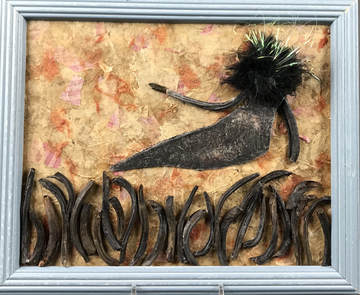
I am riding the waves, skimming along the shifting energies. I am joyous in this ever-fascinating manifestation and pointing to the ever-emerging future. Note how my waves reach up ready to tickle and welcome me, pointing to the heavens and reaching from their own medium. Note my antennae-like hair strands, picking up the shine and energy of what is above. I too am confident, relaxed, and connected with the spirit world and emerging feminine.
When I make these collages, I let the images and the materials guide me—they have to feel and look right. They hold all the stories and associations of their components--Riding the Waves holds the embodied memories of being outside collecting in three very different natural environments, the years of teaching about poulaines in a costume history class, the satisfying tactile feel of working with paper and feathers. As the same theme comes through so much later, I am excited and gratified: this too represents ease and confidence, joy, the increasing strength of the feminine, the cleansing of water, and the ability to go with the flow. This is an ongoing more-ness (Mor-ness), both reflecting and foretelling the bright energies and the rightness of being in the ever-changing emergent moment.
When I make these collages, I let the images and the materials guide me—they have to feel and look right. They hold all the stories and associations of their components--Riding the Waves holds the embodied memories of being outside collecting in three very different natural environments, the years of teaching about poulaines in a costume history class, the satisfying tactile feel of working with paper and feathers. As the same theme comes through so much later, I am excited and gratified: this too represents ease and confidence, joy, the increasing strength of the feminine, the cleansing of water, and the ability to go with the flow. This is an ongoing more-ness (Mor-ness), both reflecting and foretelling the bright energies and the rightness of being in the ever-changing emergent moment.
Author:
Beverly Gordon
Explorations and unfolding adventures in art, nature and spirit. These are intertwined--my art helps me learn about nature and spirit, and experiences with the natural and spiritual dimensions come through in the art. It's also about being amazed and awestruck--awestruck by the ways nature works, how brilliant and unfathomably huge it all is, and awestruck by what happens when we open to inner guidance. I believe that increasing the sense of appreciation and awe is a way of helping to heal the world. Join me on the path of discovery!
Archives
- November 2021 (1)
- May 2021 (1)
- February 2021 (1)
- October 2020 (1)
- September 2020 (1)
- August 2020 (1)
- June 2020 (1)
- May 2020 (1)
- April 2020 (1)
- March 2020 (1)
- January 2020 (1)
- November 2019 (2)
- September 2019 (1)
- August 2019 (2)
- July 2019 (1)
- June 2019 (1)
- May 2019 (1)
- April 2019 (1)
- March 2019 (1)
- February 2019 (1)
- January 2019 (2)
- December 2018 (1)
- November 2018 (2)
- October 2018 (1)
- September 2018 (3)
- August 2018 (1)
- July 2018 (1)
- June 2018 (3)
- May 2018 (1)
- April 2018 (1)
- March 2018 (3)
- February 2018 (2)
- January 2018 (1)