- Published on
REMEMBERING ROCKS
- Author
-
-
- Name
- Posts
- Posts
-

I really enjoy exploring cemeteries, especially those created in the 19th century with park-like landscapes. I have so much to say about this--the meaning of the Indian effigy mounds in my nearby Forest Hill cemetery, and how they were made to keep a kind of cosmological balance; the flock of robins I encountered there recently (yes, they do flock together and roost in trees in cold weather); and so much more. (As enticement for some future post, here's one image showing part of one of these mound).
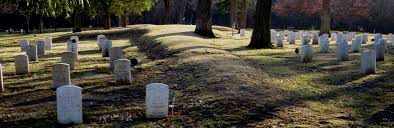
View of an effigy mound (ca. 1000 C.E.) in Forest Hill cemetery, Madison, Wisconsin, surrounded by graves from the early 20th century.
The subject of the post, though, is about stone--rock-- which is a central part of the cemetery experience. It is of course all around; gravestones are ubiquitous, from identical plain veteran's gravestones placed in neat rows to towering obelisks erected to proclaim that powerful men will take up a great deal of space, even in death. There are even solid marble gazing balls that must have taken enormous skill to carve. Stone, everywhere. Solid, appearing in a range of different colors. Stone, with dignity and staying power.
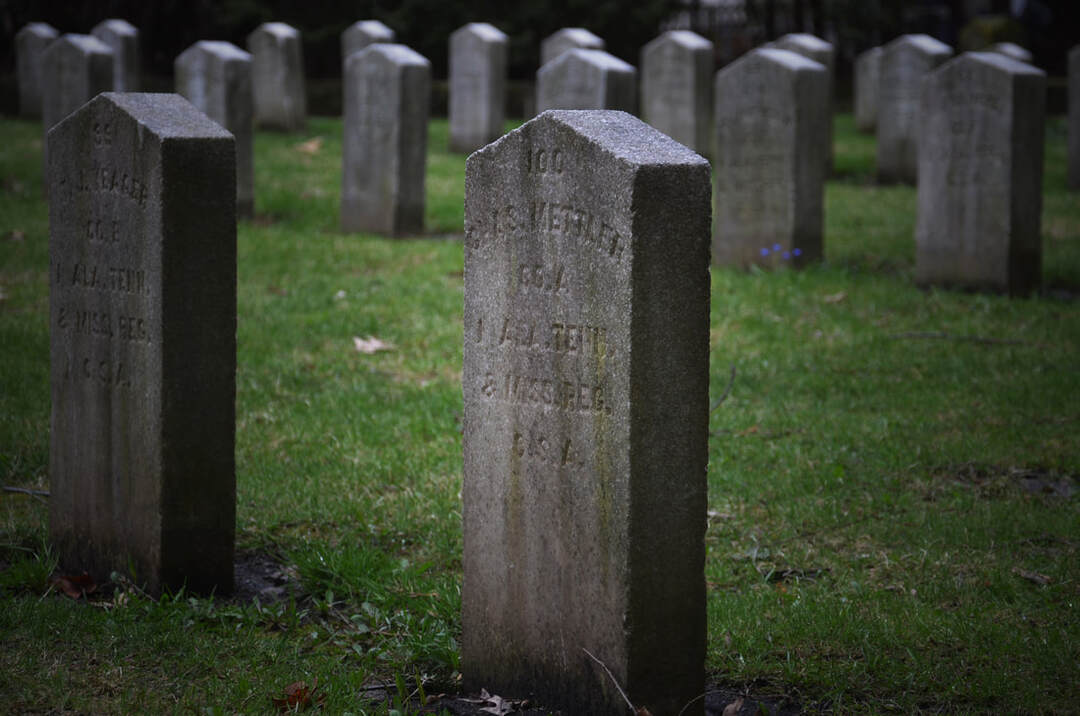
Civil War stones in Forest HIll cemetery.
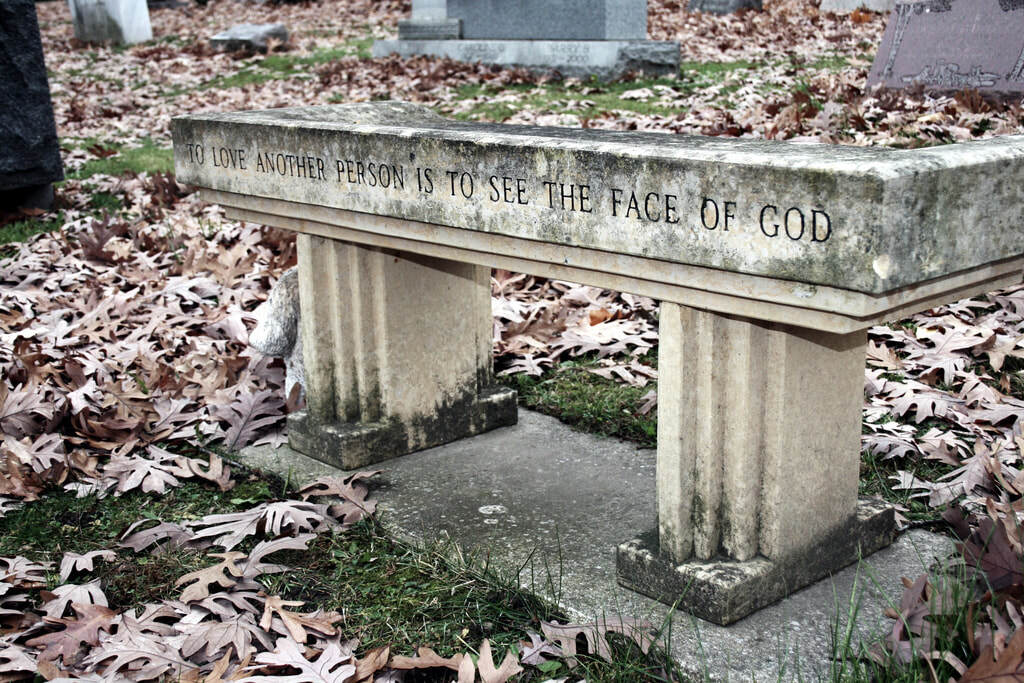
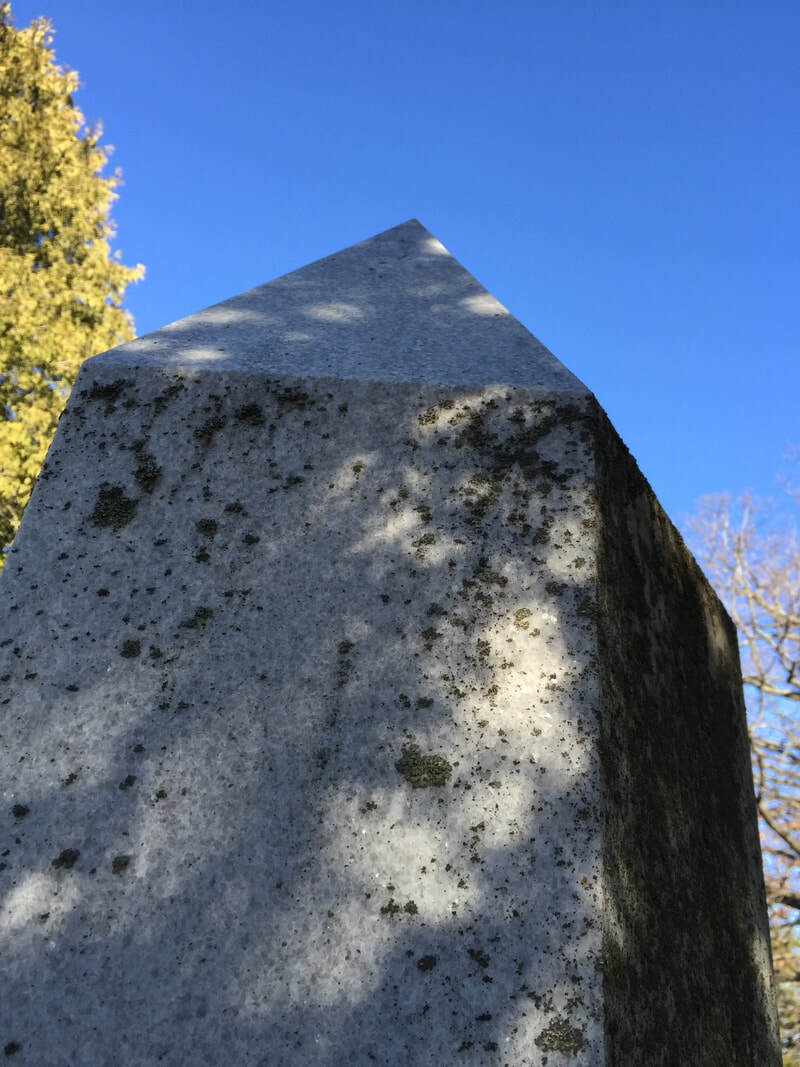
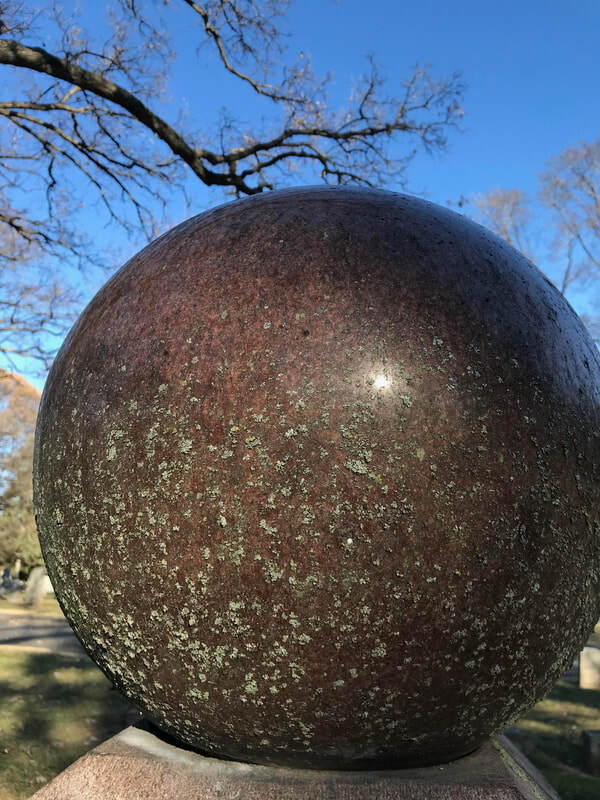
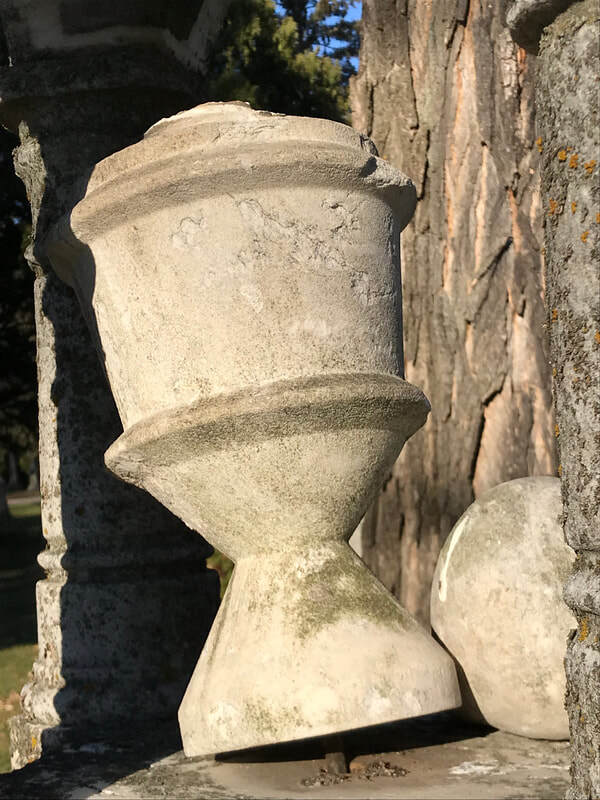
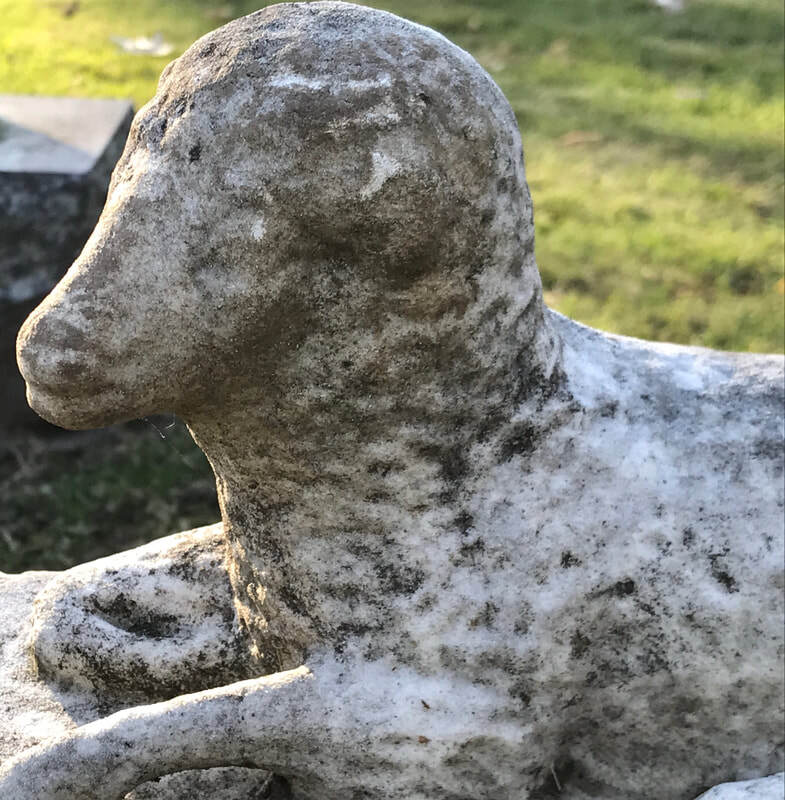
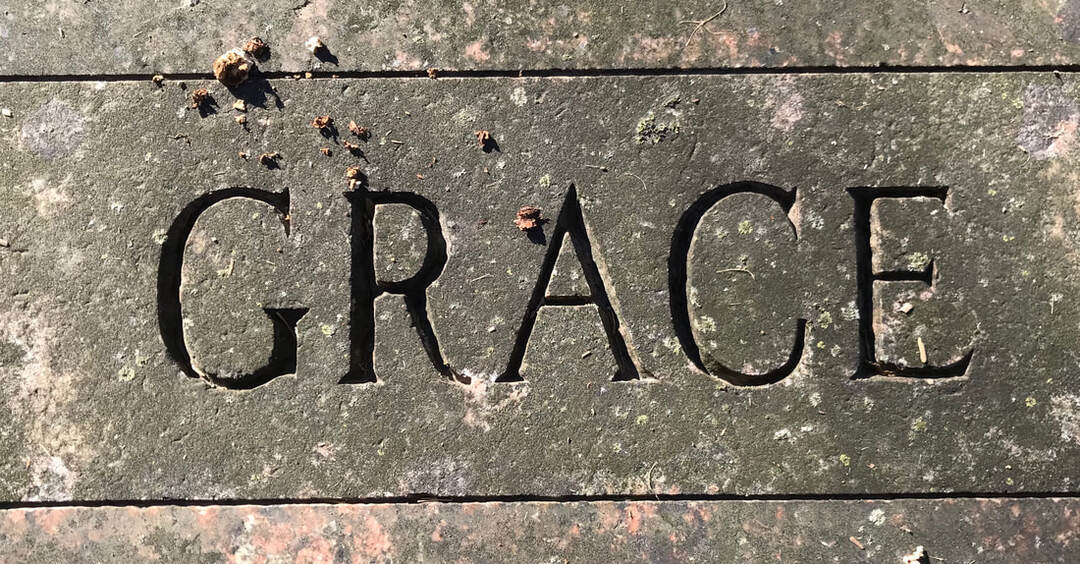
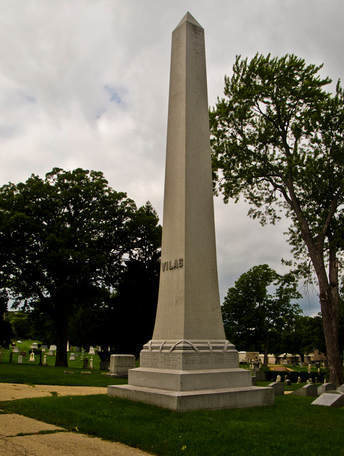
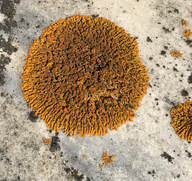
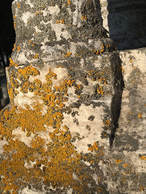
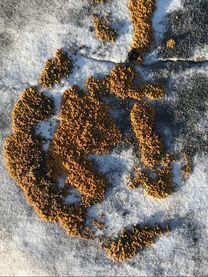
Staying power, strength, eternity. It all seems so permanent, so strong--it's "set in stone." Actually, we know that's not really true; it's matter of time and perspective. Rock is not so fixed. It can be breached; it moves. It falls down, it cracks. Moss and lichen are constantly eating it away. Mountainsides reduce to pebbles, and eventually, sand.
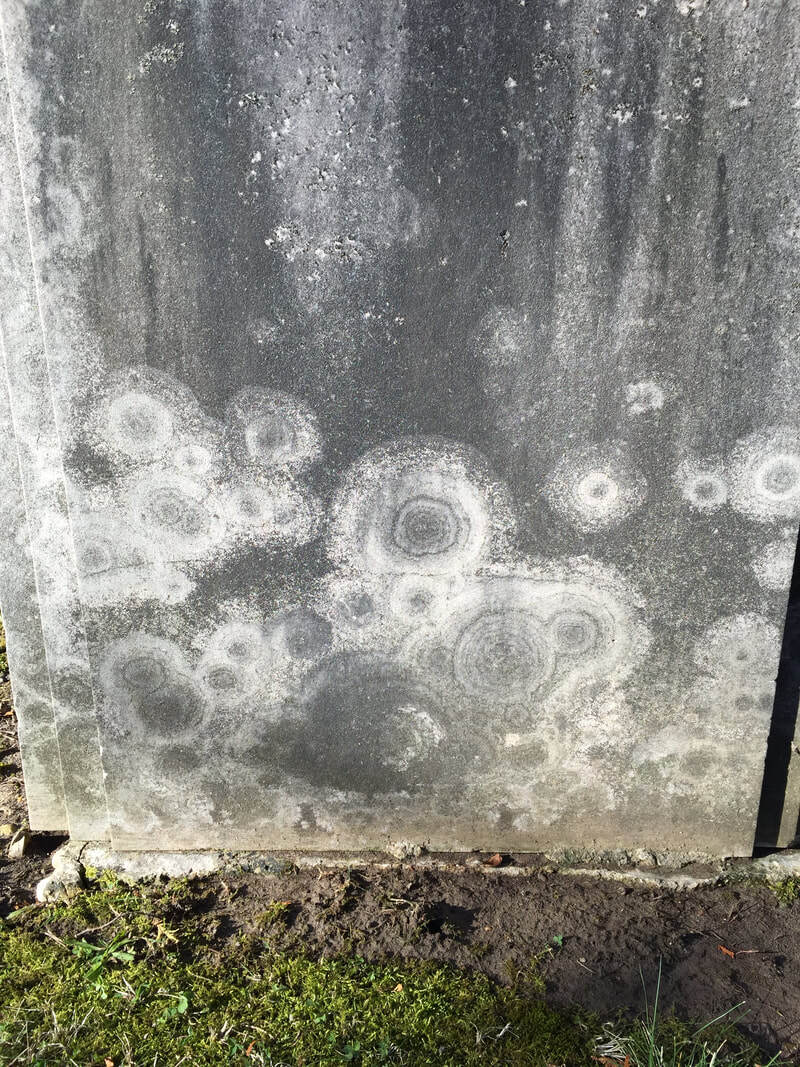
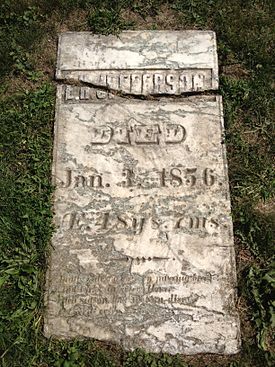
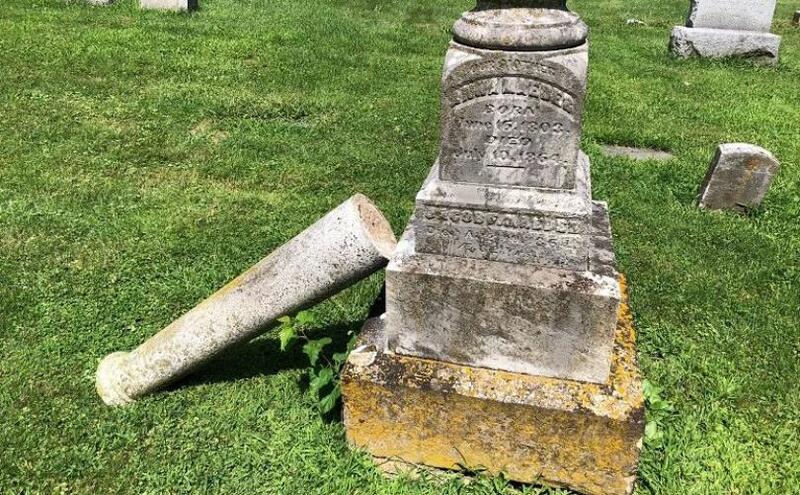
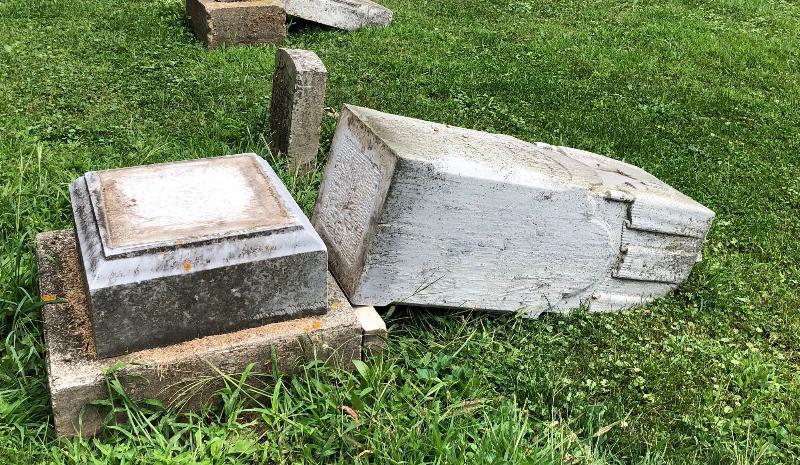
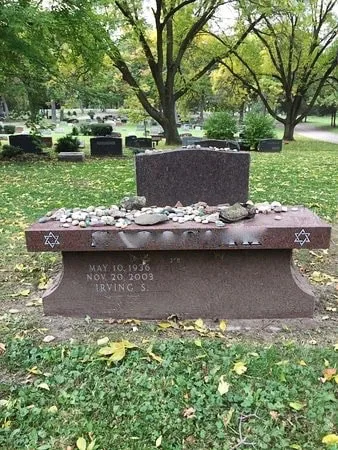
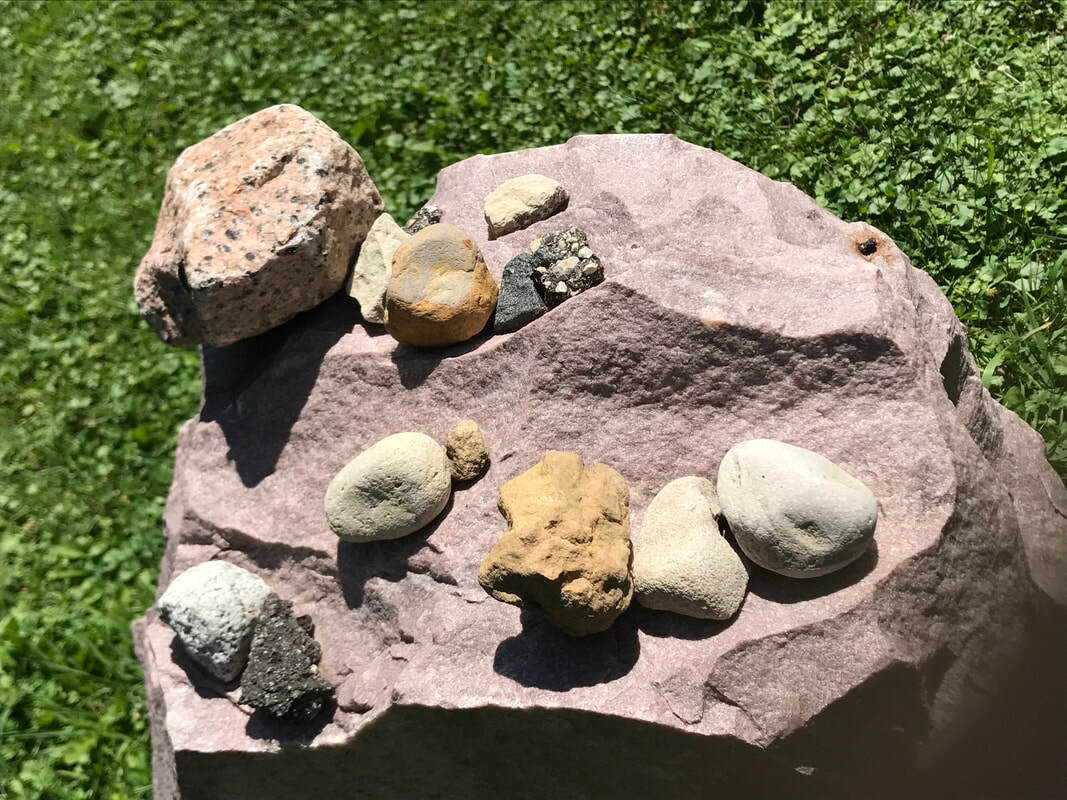
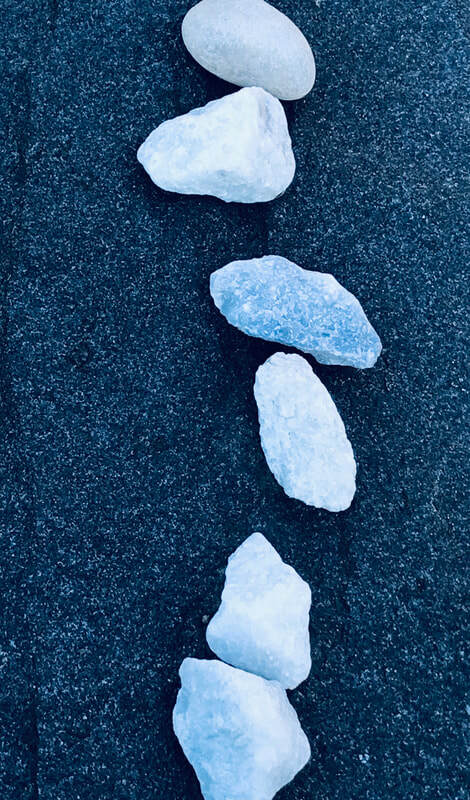
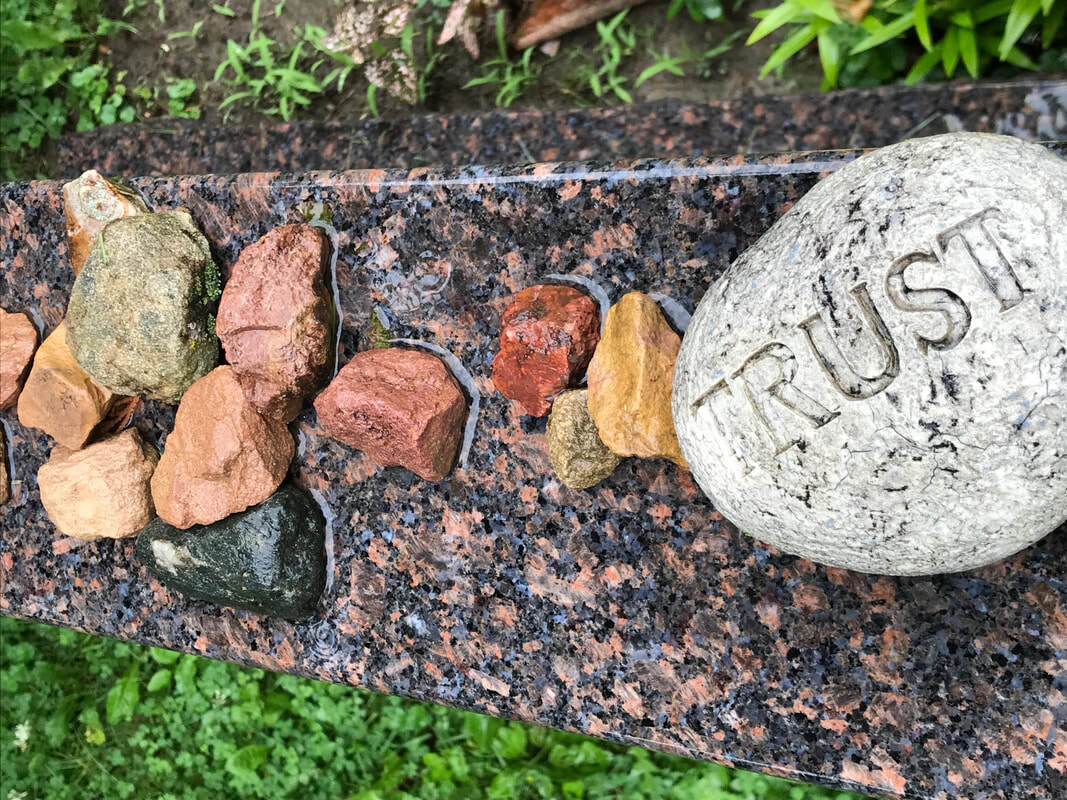
But stone still feels permanent, solid, and even small pebbles remain hard and strong. That brings me to the central focus of my discussion: the small stones that are left on larger stones as signs of long-lasting remembrance. This is an old Jewish custom, still practiced around the world. (The images I post here are all from my local place, Forest Hill). I am always drawn to these memorials, and sometimes even leave a stone of my own. I have the sense that the stones too want to be witnessed. Stones gathered together, stone upon stone. Remembering rocks.
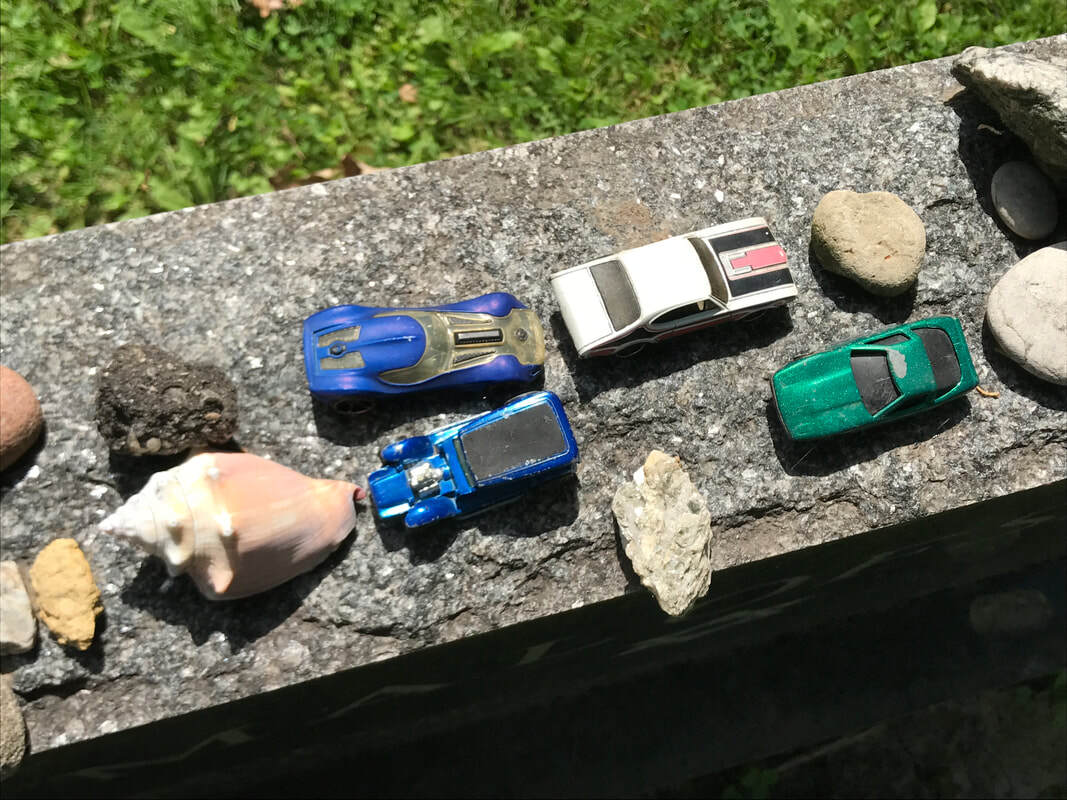
For those unfamiliar with the custom, it is a simple concept. When a visitor comes to a gravesite, he or she leaves a small stone to essentially say, "I was here, and I remember you." The stones are typically pebble-size, but this does vary, and as my images show, sometimes other materials supplement or replace the stones now--pretty pieces of glass, shells, even beads. They accumulate over time, and clearly, if one encounters a memorial marker covered with a large collection of small stones, it indicates how much the deceased was loved and appreciated. One description I read of walking in the military cemetery of Jerusalem, mentions "heaps of stones, like small fortresses" on the graves of fallen soldiers.
Stones may not be eternal, but they last longer than flowers, and do not fade. They give a sense of solidity and allude to the permanence of memory. The origin of leaving these stones is not completely clear, although there are many stories. One I like --although it may well be apocryphal-- is that flowers were originally left at graves to cover up the smell of a decaying body, but because Jews were traditionally buried within 24 hours, the flowers were not needed. Stones were, again, a longer lasting offering. A related idea is that living people like the smell of flowers, but the deceased are beyond that--they are one with God and no longer need such temporary pleasures. There are also stories about stones helping to keep the soul of the deceased from wandering, about laying down arms in death (symbolized by laying down the rocks), and shepherds tracking their sheep by representing each with a pebble. One particularly poetic explanation is that a headstone symbolizes the soul of the deceased (remember, there were not always headstones--just piles of stones that might keep a wild animal away from a recently buried body), and when a visitor leaves a stone, it symbolizes their own soul and the way all is "tethered together in mitzvah [good deed, blessing] and metaphor."
For those unfamiliar with the custom, it is a simple concept. When a visitor comes to a gravesite, he or she leaves a small stone to essentially say, "I was here, and I remember you." The stones are typically pebble-size, but this does vary, and as my images show, sometimes other materials supplement or replace the stones now--pretty pieces of glass, shells, even beads. They accumulate over time, and clearly, if one encounters a memorial marker covered with a large collection of small stones, it indicates how much the deceased was loved and appreciated. One description I read of walking in the military cemetery of Jerusalem, mentions "heaps of stones, like small fortresses" on the graves of fallen soldiers.
Stones may not be eternal, but they last longer than flowers, and do not fade. They give a sense of solidity and allude to the permanence of memory. The origin of leaving these stones is not completely clear, although there are many stories. One I like --although it may well be apocryphal-- is that flowers were originally left at graves to cover up the smell of a decaying body, but because Jews were traditionally buried within 24 hours, the flowers were not needed. Stones were, again, a longer lasting offering. A related idea is that living people like the smell of flowers, but the deceased are beyond that--they are one with God and no longer need such temporary pleasures. There are also stories about stones helping to keep the soul of the deceased from wandering, about laying down arms in death (symbolized by laying down the rocks), and shepherds tracking their sheep by representing each with a pebble. One particularly poetic explanation is that a headstone symbolizes the soul of the deceased (remember, there were not always headstones--just piles of stones that might keep a wild animal away from a recently buried body), and when a visitor leaves a stone, it symbolizes their own soul and the way all is "tethered together in mitzvah [good deed, blessing] and metaphor."
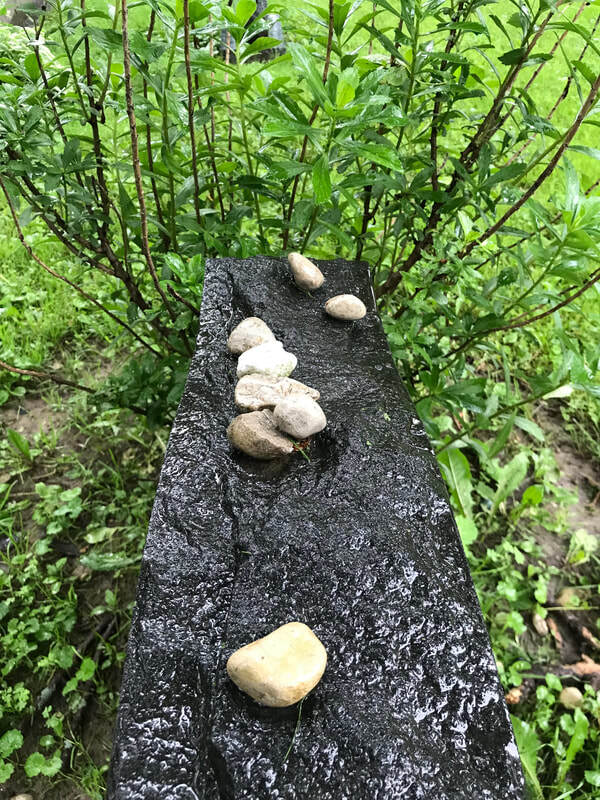
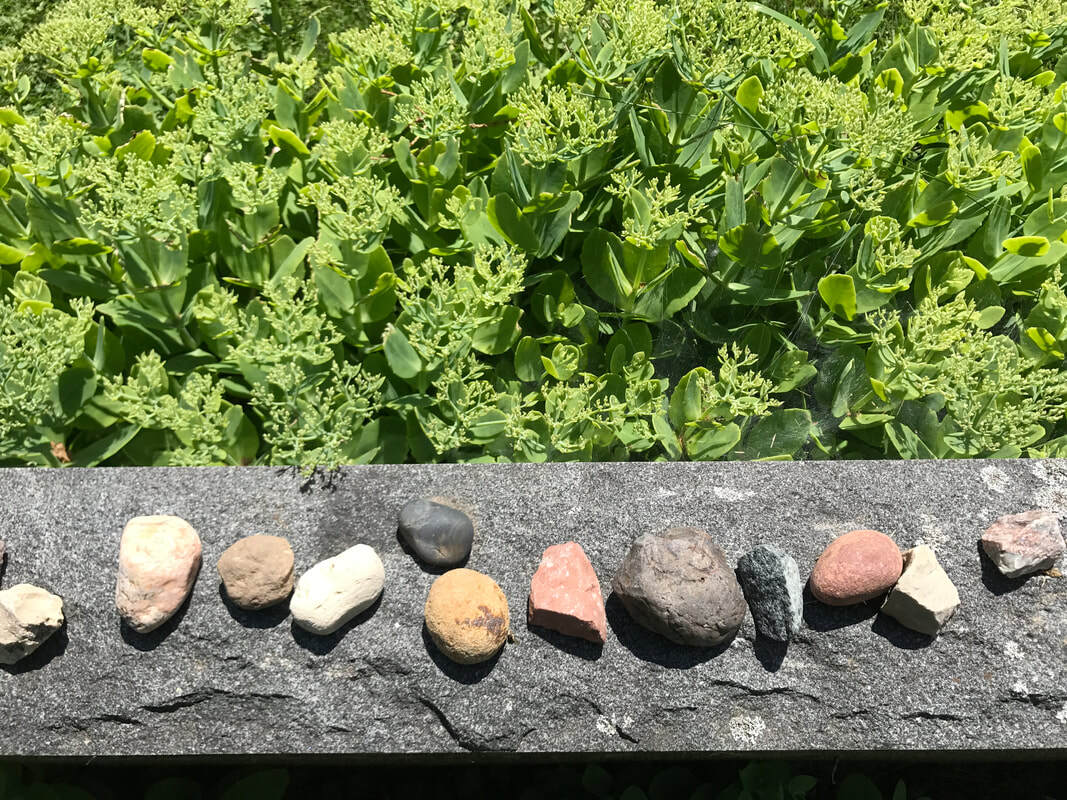
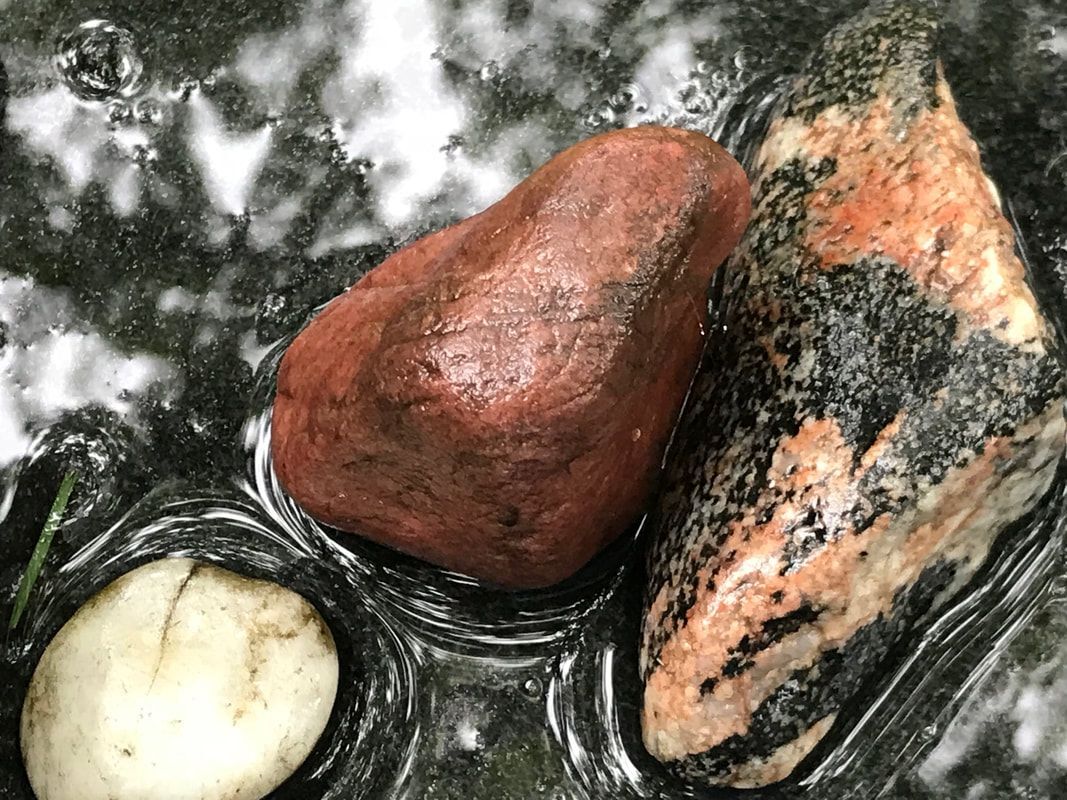
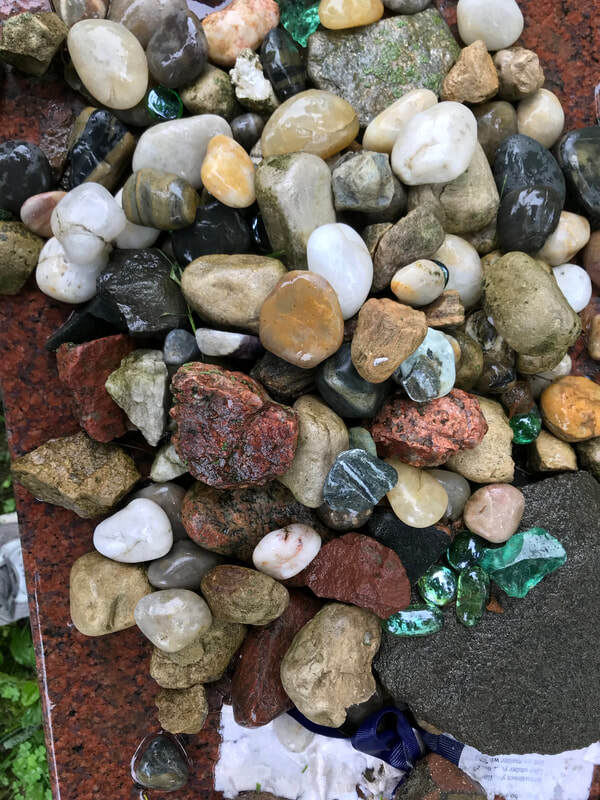
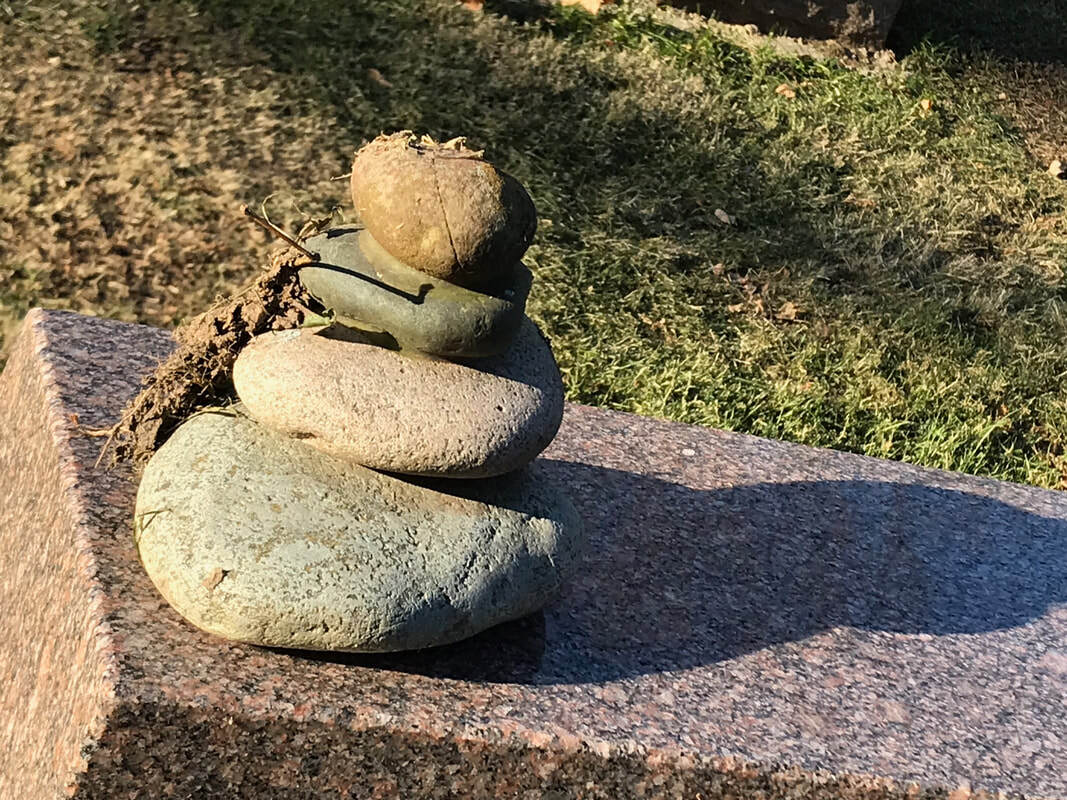
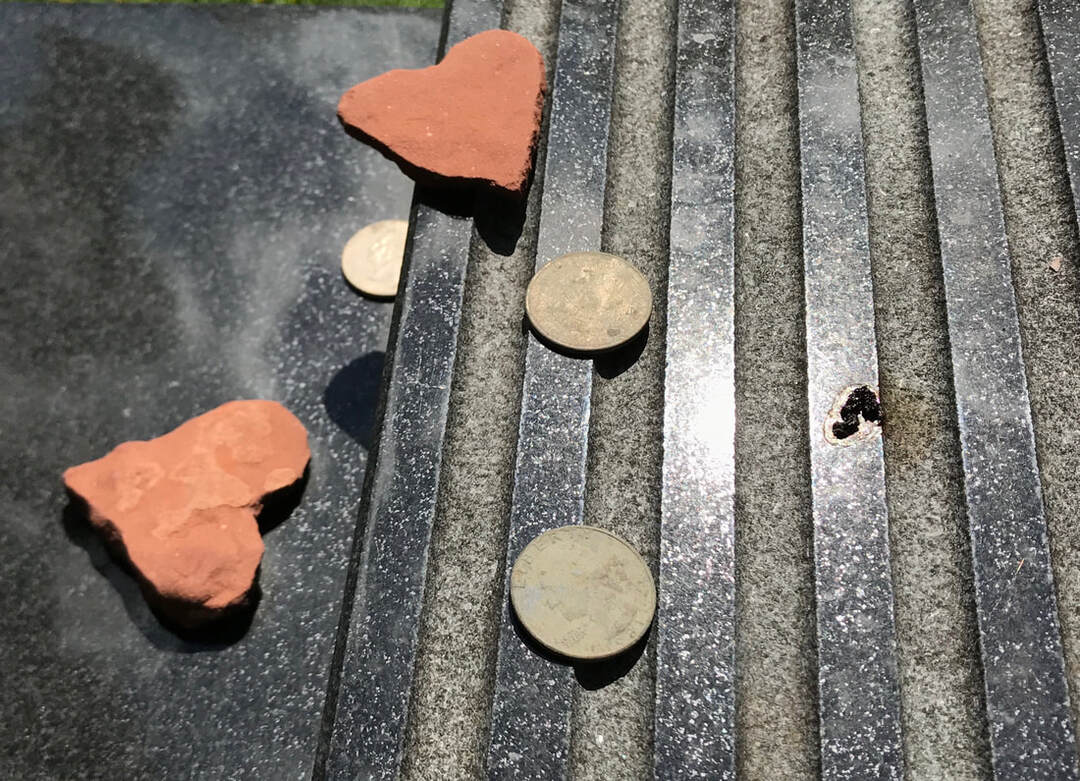
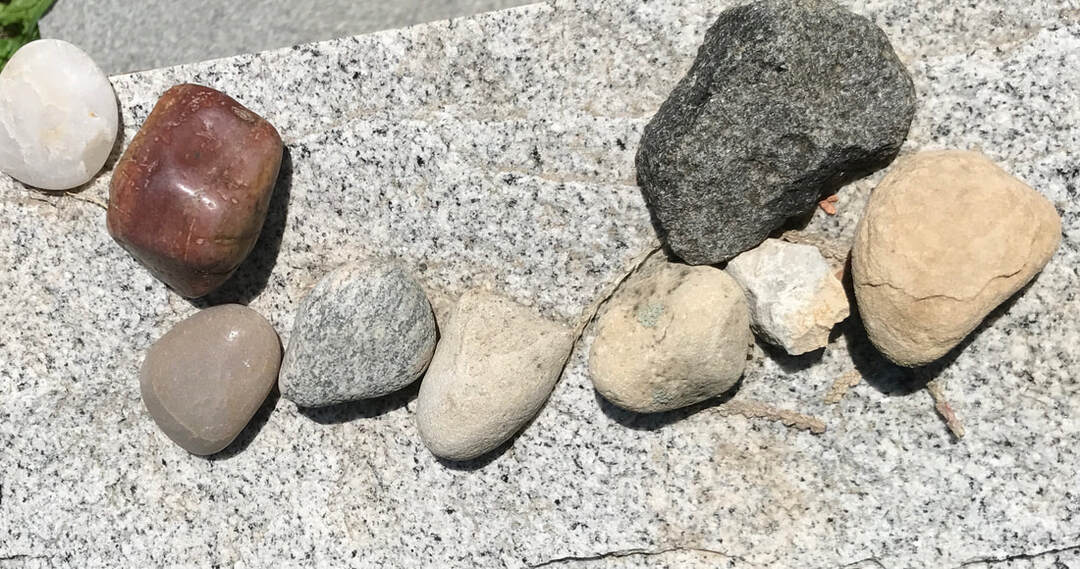
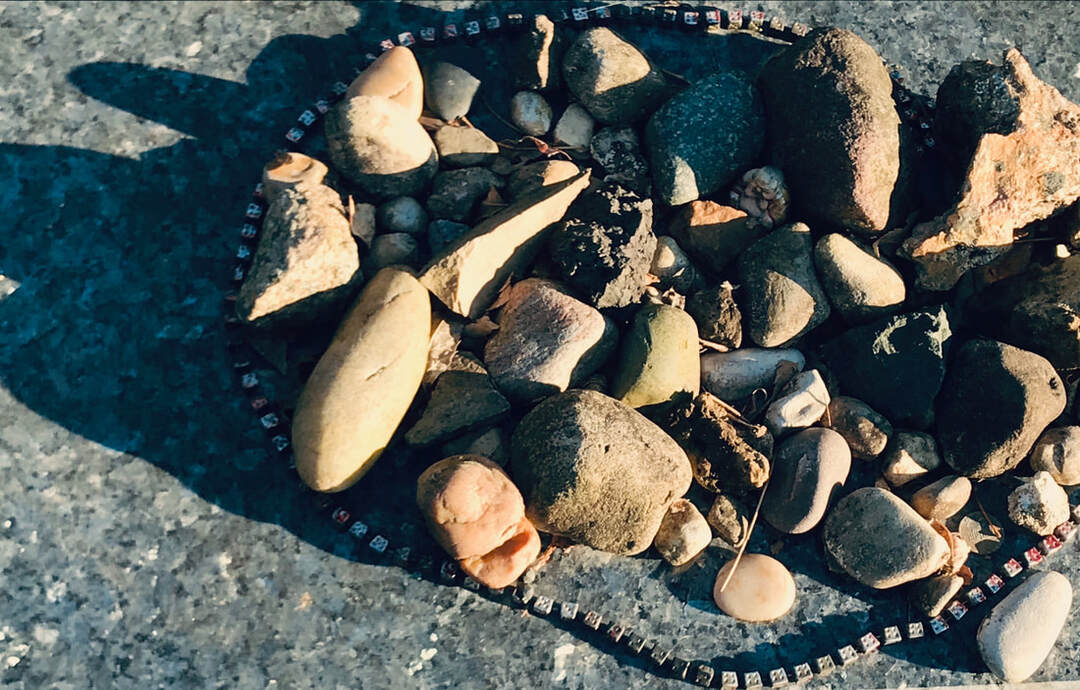
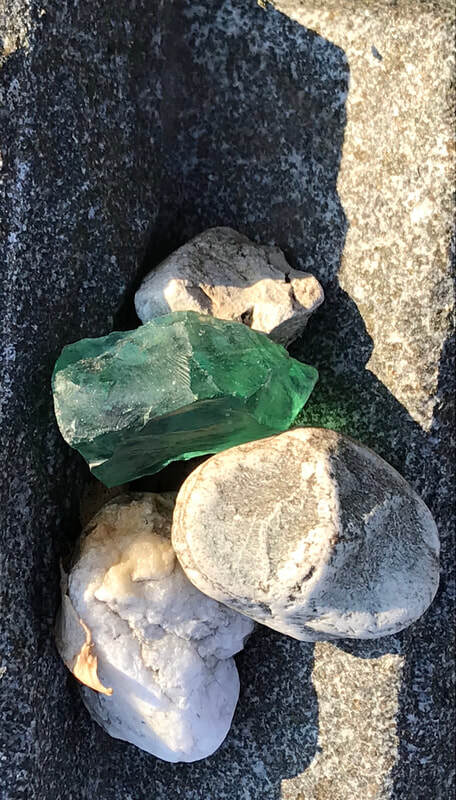
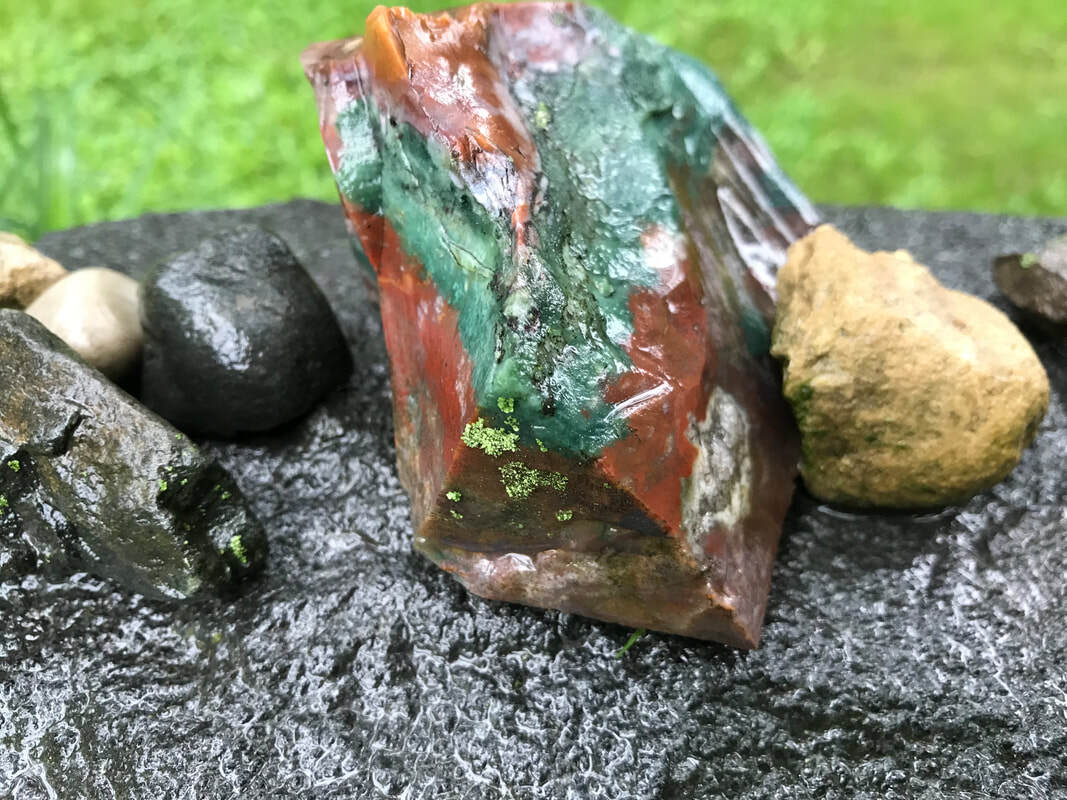
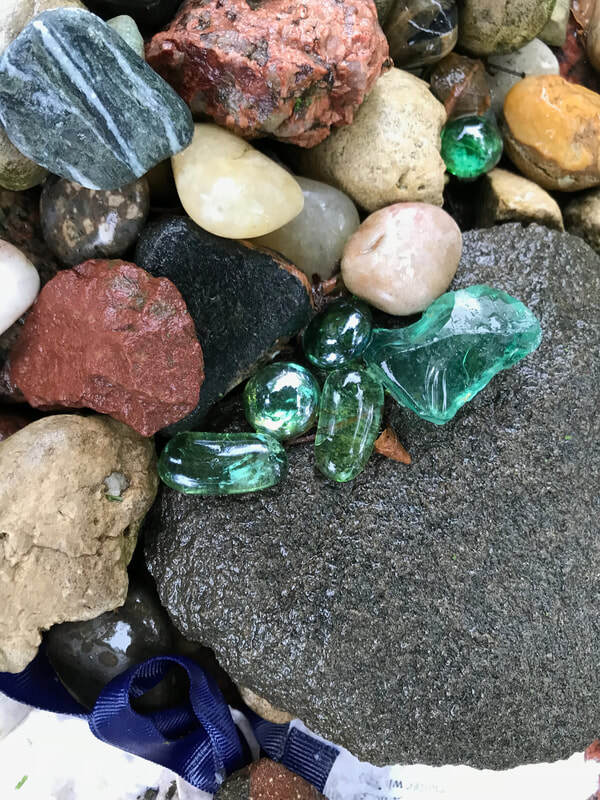
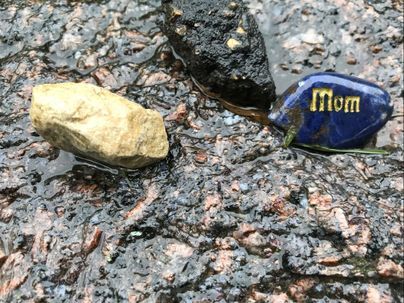
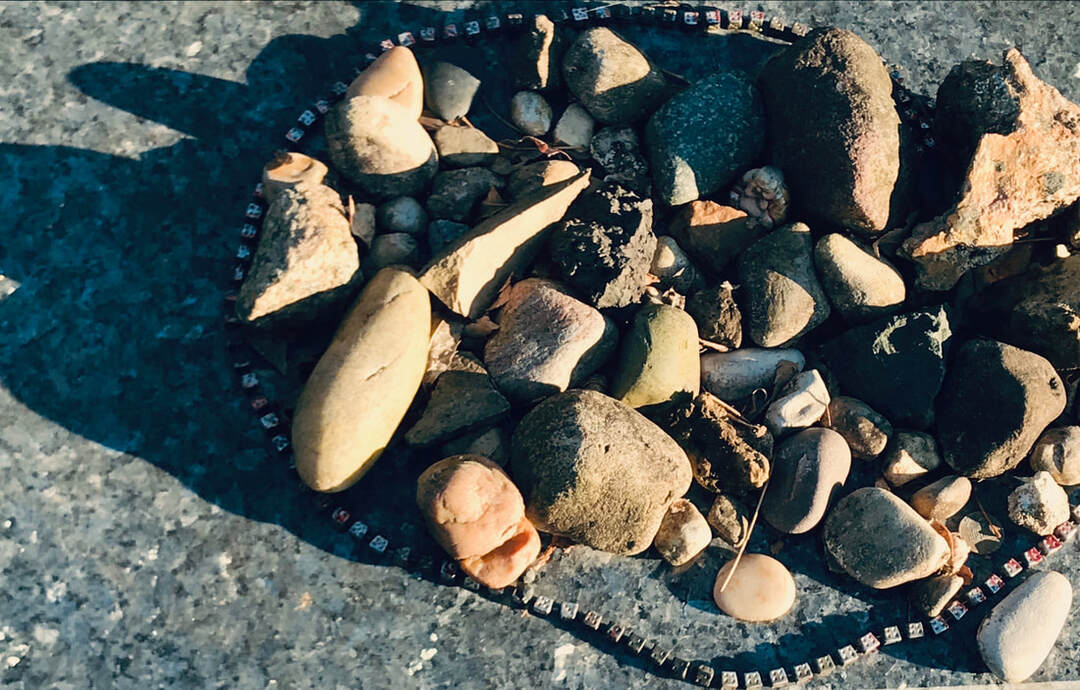
It's interesting to note that the tradition of leaving rocks is not limited to Jewish graves any more; others are increasingly finding it a meaningful tradition. And parenthetically, there is a growing practice of leaving coins on (non-Jewish American) military gravestones. There is a code of meaning, with each coin symbolizing a particular relationship with the deceased. A nickel would be left by someone who was in boot camp with the fallen soldier, while a quarter would indicate the visitor was present when the person was killed.
Other than remarking on an interesting practice, I am impelled to write about these memory stones because I've been feeling the energy of rocks so strongly. It's hard to write about; it's a feeling, an intimation about something. It is not a concept. I tried to capture some of it with my poems and images of the rocks on Mt. Shasta (August, 2018), and it has to do with the rocks holding the holographic imprint, holding memory, but maybe a much longer, deeper memory than we even know. Not exactly really permanent, but so long-lived by our standards that it comes close. Discussions of the Jewish custom of leaving rocks keep referring back to the Bible and the rocky landscape that was part of Jewish history. The stone on which Abraham was to have sacrificed Isaac is referred to as hashityah, the foundation stone of the world. A pile of stones could be a sacred place, a place of prayer. Moses sat on "the Rock," and carved the tablets from it. Jacob's Ladder rose from a stone. On the darker side, people were stoned to death, and "stony" implies unyielding, cold, and without empathy.
I was very moved recently in driving through the Atlas mountains in Morocco. This is a dramatic region, all about rock and stones. The terrain consists of stones for miles and miles and miles, sometimes pebble-sized, sometimes big boulders. Houses are built of stone. Stone tumbles into rivers. Sheep and goats climb over high stony peaks. I kept sensing the stone memory, the consciousness held in all that rock, but I couldn't really access or translate it. I felt stone-ness, but there are no words or concepts to say what it was I felt. At one point one of my traveling companions remarked that she wouldn't want any of that "real estate"--it was too much relentless rock, too hard to deal with, too unfriendly. Rocky terrain=trouble. I reacted almost viscerally; yes that's true, I thought, but you aren't asking what the stones know, you aren't feeling into the stone or the stone space. Maybe those who live here live deep in the stone, know what the stone knows, hold stone memory. Maybe the rock remembers them. Maybe they have another, silent experience that you can't even imagine.
Maybe. Right now, today, I will hold some stones and breathe with them: round smooth ones tossed by Lake Michigan, and sparkly ones from riverbeds in the high Andes (another oh-so-rocky landscape). I will even touch the very fine sand I brought back from the Sahara--sand that was stone, ground down to the consistency of fairy dust. Maybe I will breathe them in, absorb their stone wisdom. Maybe I will be taken into the secrets of stone.
Other than remarking on an interesting practice, I am impelled to write about these memory stones because I've been feeling the energy of rocks so strongly. It's hard to write about; it's a feeling, an intimation about something. It is not a concept. I tried to capture some of it with my poems and images of the rocks on Mt. Shasta (August, 2018), and it has to do with the rocks holding the holographic imprint, holding memory, but maybe a much longer, deeper memory than we even know. Not exactly really permanent, but so long-lived by our standards that it comes close. Discussions of the Jewish custom of leaving rocks keep referring back to the Bible and the rocky landscape that was part of Jewish history. The stone on which Abraham was to have sacrificed Isaac is referred to as hashityah, the foundation stone of the world. A pile of stones could be a sacred place, a place of prayer. Moses sat on "the Rock," and carved the tablets from it. Jacob's Ladder rose from a stone. On the darker side, people were stoned to death, and "stony" implies unyielding, cold, and without empathy.
I was very moved recently in driving through the Atlas mountains in Morocco. This is a dramatic region, all about rock and stones. The terrain consists of stones for miles and miles and miles, sometimes pebble-sized, sometimes big boulders. Houses are built of stone. Stone tumbles into rivers. Sheep and goats climb over high stony peaks. I kept sensing the stone memory, the consciousness held in all that rock, but I couldn't really access or translate it. I felt stone-ness, but there are no words or concepts to say what it was I felt. At one point one of my traveling companions remarked that she wouldn't want any of that "real estate"--it was too much relentless rock, too hard to deal with, too unfriendly. Rocky terrain=trouble. I reacted almost viscerally; yes that's true, I thought, but you aren't asking what the stones know, you aren't feeling into the stone or the stone space. Maybe those who live here live deep in the stone, know what the stone knows, hold stone memory. Maybe the rock remembers them. Maybe they have another, silent experience that you can't even imagine.
Maybe. Right now, today, I will hold some stones and breathe with them: round smooth ones tossed by Lake Michigan, and sparkly ones from riverbeds in the high Andes (another oh-so-rocky landscape). I will even touch the very fine sand I brought back from the Sahara--sand that was stone, ground down to the consistency of fairy dust. Maybe I will breathe them in, absorb their stone wisdom. Maybe I will be taken into the secrets of stone.
4 Comments
Lovely, thoughtful blog to read on this overcast,grey day. Thank you Beverley..
I love walking in cemeteries, too, but none has ever been so dramatic as the Jewish cemetery in Prague, so packed with stones and stones upon stones upon stones, tilted, and piles upon piles. I bought a small etching just beyond the gate that hangs in my dining room. Above it, I just hung my piece from our Visualizing Verse show, which is the word, "Wisdom" in Hebrew, transliteration, English, referring to a wonderful poem, "Thirsting," by Alicia Ostriker and the Psalm, "Teach us to number our days." Your meditation reinforces these memories for me. Thanks, Beverly.
Beverley... Thank you for your poignant thoughts and images. By naming 'the stones too want to be witnessed' breathes life to their journey of being placed or found or existing as they tumble to shore. Within the consciousness of rocks lies untold stories. I love the feel of a rock in my hand. I will listen more closely. Blessings my friend.
A Gold IRA is a retirement account that lets you invest in physical gold and other precious metals, offering tax benefits and portfolio diversification. It helps protect savings from inflation and economic instability.